
This post contains product affiliate links. These are mainly on items/hotels/tours that I personally endorse & love. I may earn a small commission if you make a purchase, but at no extra cost to you.
Discover why Amsterdam is best explored on foot. From hidden courtyards to canal-side markets, here’s how to experience the city like a local.
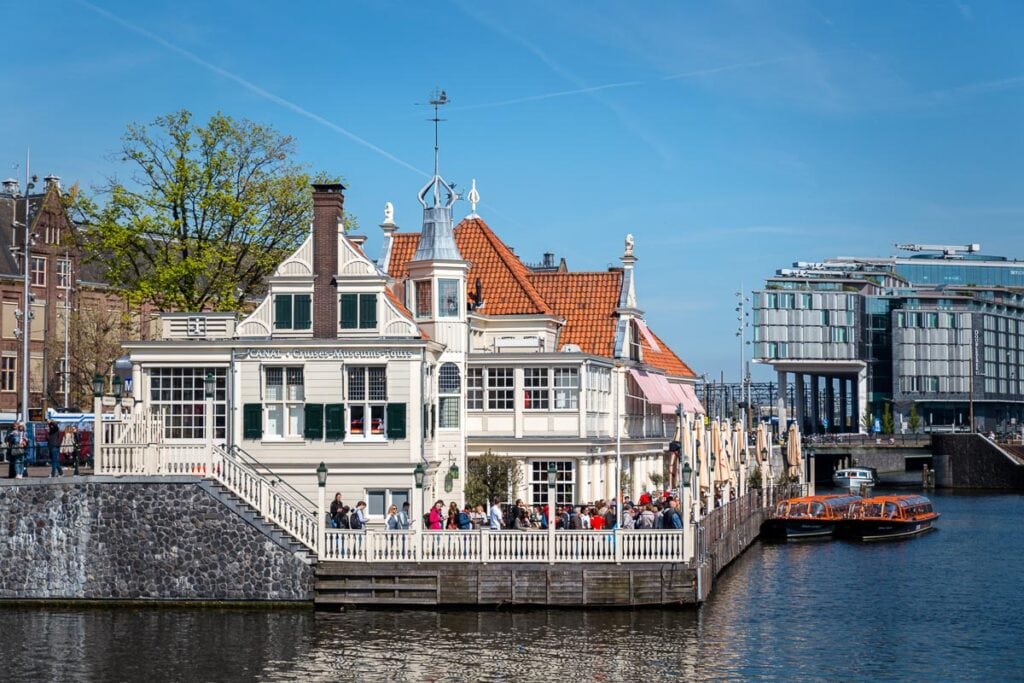
There is something about Amsterdam that gets under your skin the moment you arrive. I’ve visited this city more times than I can count, and every single time, I find myself lacing up my shoes and heading out on foot. Not because I have to, but because walking here feels like the only way to truly experience it.
Amsterdam isn’t a city you observe from a distance; it’s one you need to immerse yourself in. Trust me on that one. The centuries-old canal belt, the leaning merchant houses, the smell of coffee drifting out of corner cafés – none of it lands the same way from a tour bus window or the back of a taxi. You have to experience Amsterdam sloooowly. And that means on foot.
It helps, of course, that the city was practically built for walking. Compact, flat, and lined with waterways that act as natural signposts. I always think it’s a city that rewards those who wander without a plan. If you’re visiting for the first time, I’d really recommend joining one of Amsterdam’s city walking tours. It’s a brilliant way of getting your bearings, you’ll learn loads about the city, and you’ll get some top tips on where to go and where to eat too.
In the meantime, here is why I love Amsterdam and why I think it’s one of the most walkable cities in Europe. This should give you a little taster of what it’s like here.
The architectural embrace of the Canal Belt
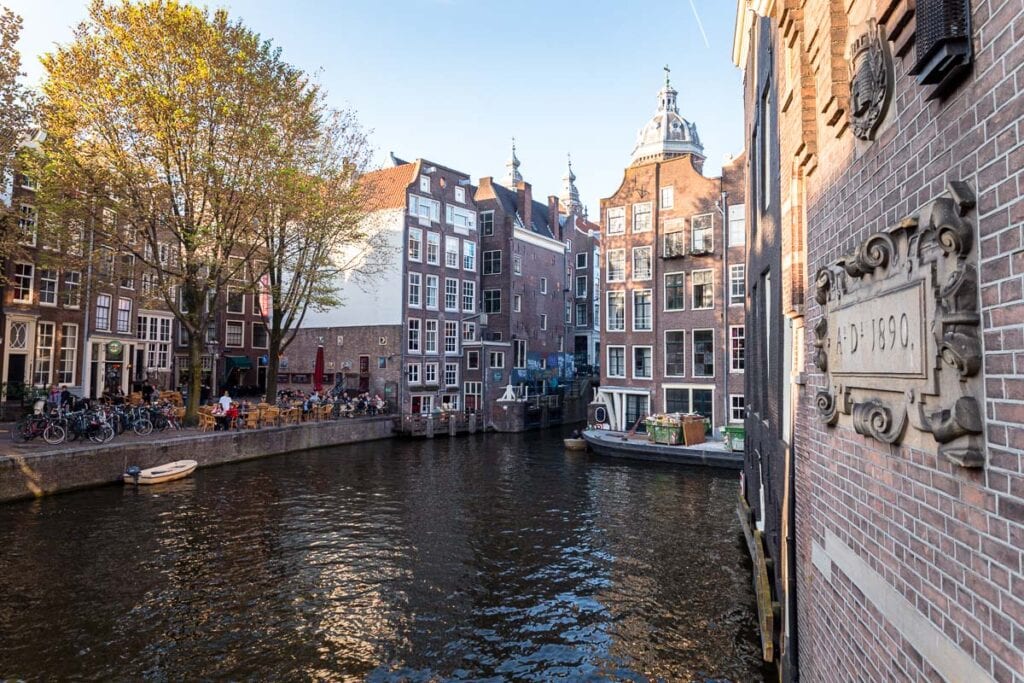
One of the reasons why Amsterdam is so walkable is because of its geography. The famous Grachtengordel – the Canal Belt – is a masterpiece of 17th-century urban planning, arranged in a series of concentric horseshoes that create a natural navigation system. It’s so historically significant that it holds UNESCO World Heritage status, and walking through around it, you immediately understand why.
Unlike the wide, car-centric boulevards of so many modern cities, Amsterdam feels intimate and intentional. The buildings themselves seem to lean in to greet you. Built on wooden piles driven into soft, boggy soil, the historic canal houses have shifted over the centuries, giving the streetscapes a wonderfully crooked, almost theatrical appearance.
On foot, you’ll start to notice all the little details you’d otherwise miss enttirely: the ornate gables unique to each merchant family, the iron hoist hooks once used to lift furniture through upper-floor windows, and the tiny pavement gardens packed with rosebushes and benches. For me, it’s these small touches that make wandering around Amsterdam so rewarding.
A sensory masterclass
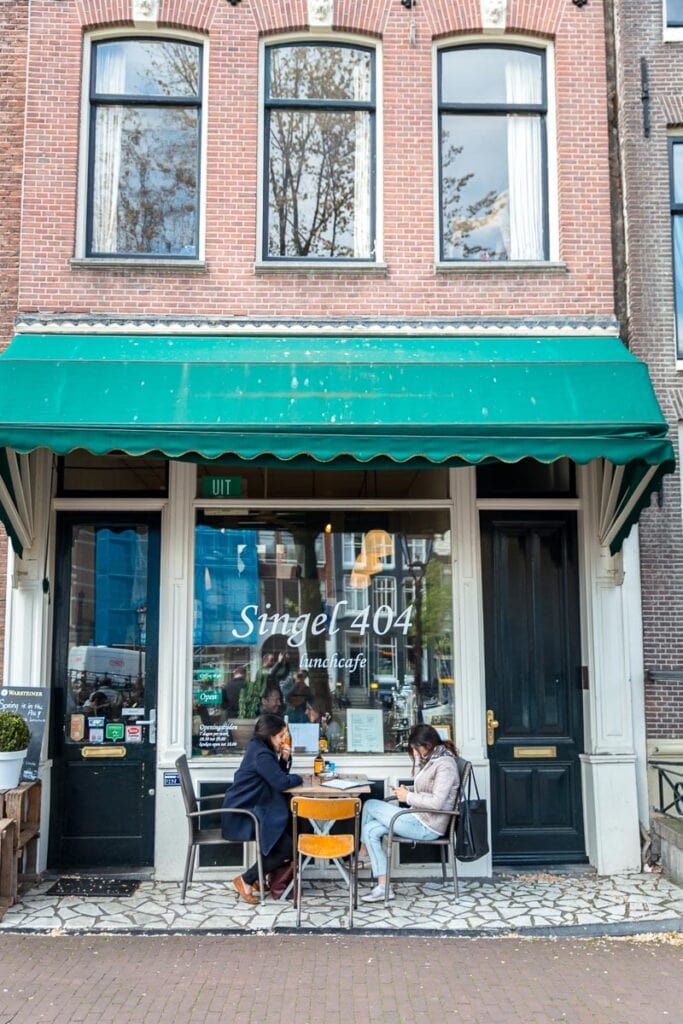
I always think of Amsterdam as a city that reveals itself slowly rather than all at once. Early in the morning, I’ll find myself wandering through quiet canals where the water barely moves and the streets feel half asleep. In places like the Jordaan, the city feels almost domestic – laundry hanging over canal houses, bikes leaning against bridges, and the smell of coffee drifting out onto empty streets. Then, as I cross the bridges of the Prinsengracht, the stillness breaks just slightly, like the city is slowly waking up around me.
One of the things I loved most about exploring Amsterdam on foot was being able to follow my instincts completely. I’d hear the bells of Westerkerk in the distance or catch the sweet smell of fresh stroopwafels and suddenly find myself wandering down a side street I’d never planned to visit. For me, that kind of spontaneity is what travel is all about – stumbling into a traditional Dutch brown café, ordering a cold glass of Heineken, and soaking up the gezelligheid as the world drifts by outside.
Neighbourhoods designed for discovery
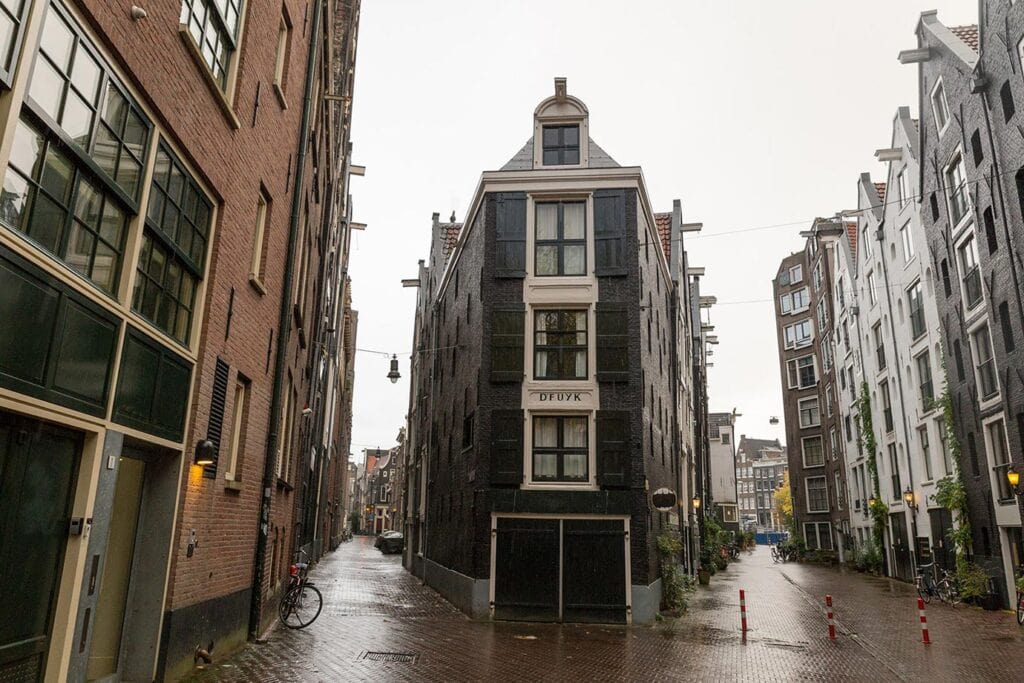
Amsterdam’s walkability extends well beyond the tourist-heavy centre, and in many ways, the city’s experience-driven character shines brightest in the surrounding neighbourhoods.
Take De Pijp. Originally a working-class district built in the 19th century to ease overpopulation in the city, it’s now a vibrant, bohemian quarter unlike anywhere else in Amsterdam. The Albert Cuyp Market, one of the largest outdoor market in Europe, runs through its heart, and it’s the kind of place that simply cannot be appreciated from a car window. You have to walk it: sampling pickled herring, browsing rails of vintage clothing, and navigating the gloriously chaotic, multicultural energy that defines so much of modern Dutch life.
Then there are De Negen Straatjes (the Nine Streets), a small grid of narrow lanes linking the main canals that feels made for slow wandering in Amsterdam. I love how quickly things change here: one moment you’re stepping into a tiny shop dedicated entirely to specialist toothbrushes, and a few paces later you’re peering into a contemporary photography gallery. Walk a little further and you’ll find a quiet canal-side bench that feels like it was placed there purely for people-watching. It’s the kind of neighbourhood that naturally slows you down without even trying.
The pedestrian is king
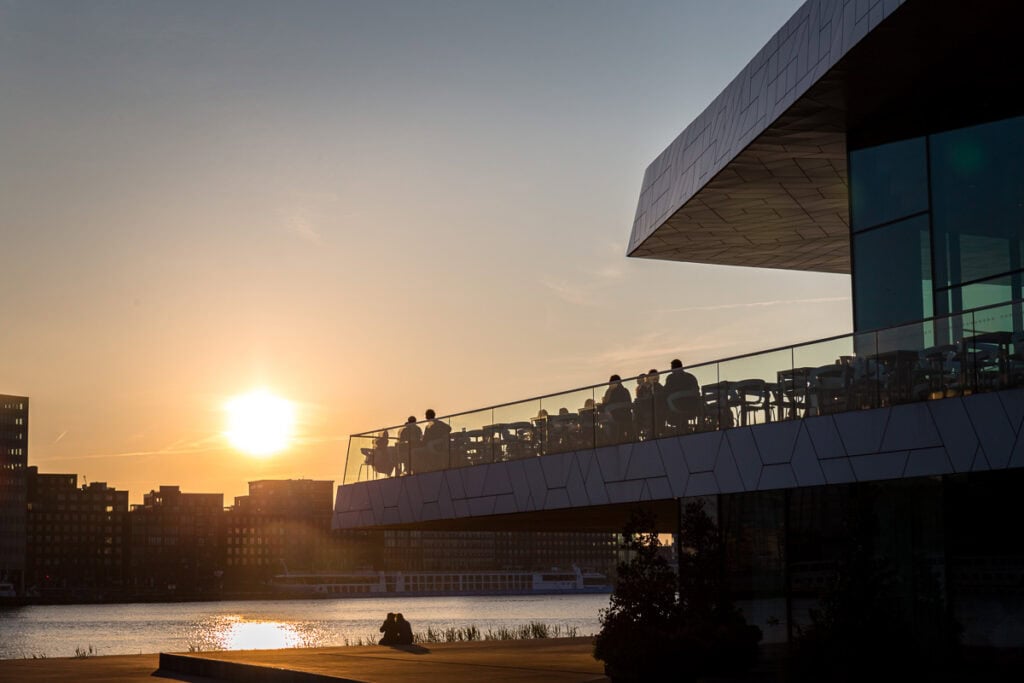
Amsterdam has a well-earned reputation as a cycling city, but what I find even more interesting is how much space it has reclaimed for people on foot. Much of the historic centre is now pedestrian-priority, and the effect is immediately noticeable. When you’re not constantly dodging traffic, your mind has room to wander alongside your feet. I often find myself slowing down without realising it, just taking in the rhythm of everyday life; a cat dozing in a first-floor window, the intricate tile work around a doorway, the way the canal water catches the late-afternoon light.
It’s a city that almost encourages you to notice more. I’ve lost track of how many times I’ve stopped just because something small caught my eye. The city is also strikingly flat. There are no hills to climb, no lung-burning ascents. Just the gentle rise of a bridge, which always seems to offer the perfect viewpoint over the canals.
Experience over sightseeing
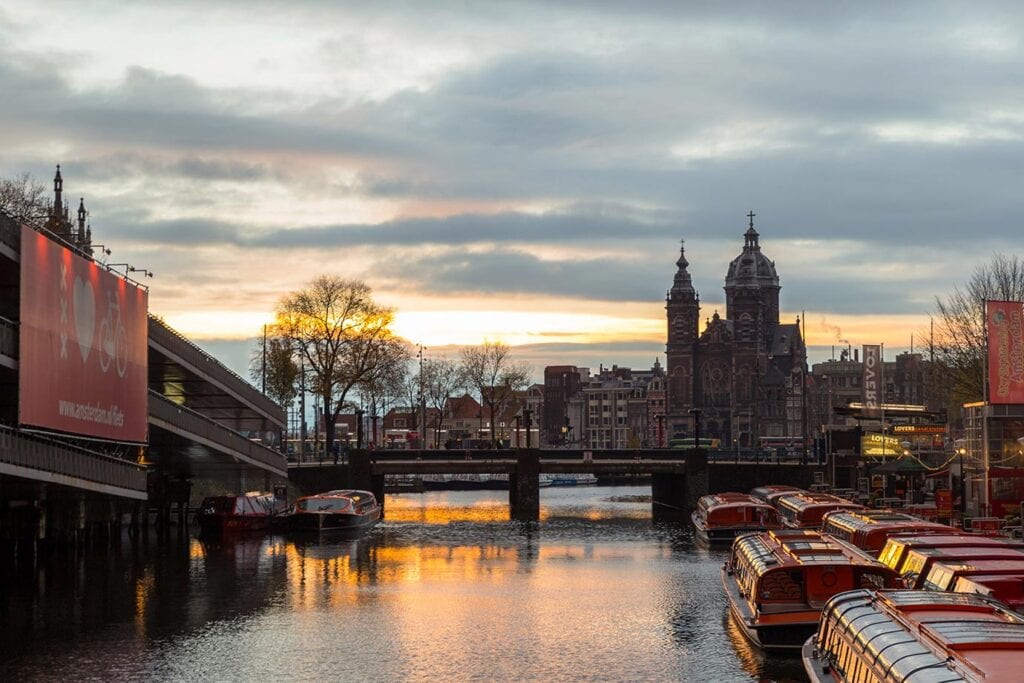
It’s easy to fall into the trap of treating Amsterdam as a checklist: the Rijksmuseum, the Royal Palace, the Anne Frank House. And yes, those places matter, and they’re worth your time. But Amsterdam’s greatest attraction is the city itself.
Walking puts you into the rhythm of daily life here. You stand at the same crossings as the locals, navigate the same narrow alleyways, and stumble upon things no guidebook thinks to mention – the Begijnhof, a hidden courtyard that feels like a portal straight back to the 14th century; the extraordinary street art at the NDSM wharf, a former shipyard turned creative hub across the water. These are the discoveries that stay with you long after you’ve returned home. And the only way to find them is on foot.
Amsterdam is a city that has captured my heart time and time again, and I hope this article has shown you exactly why. There is nowhere quite like it in Europe, so lace up your shoes, follow your nose, and let this incredible city surprise you at every turn.
Have you been to Amsterdam? I’d love to know your favourite hidden corners in the comments below.