This post contains product affiliate links. These are mainly on items/hotels/tours that I personally endorse & love. I may earn a small commission if you make a purchase, but at no extra cost to you.
Planning the Camino Inglés? This guide to the A Coruña route covers the four stages, the toughest climb and other practical tips.
I’ve always thought the best way to get under the skin of a place is on foot. Some of my favourite travel memories have come from long days hiking, when the miles tick by slowly and the small details have time to sink in. I’ve done big multi-day treks in Annapurna in Nepal, and through the Austrian Alps. Both of those trips will live with me forever. One place that’s been on my radar for years is Camino de Santiago. I think that’s the same for any hiker.
The trouble is that most people picture the Camino Francés, which takes the best part of five weeks. Five weeks! Who has time for that, especially with the little ones at home. “Sorry darling, I’m just going to head off for the next five weeks – you’ll be okay with the kids, won’t you?” So when I started looking into the Camino Inglés, or English Way, it immediately caught my attention.
It starts in the port city of A Coruña and is the shortest recognised route into Santiago de Compostela. You can walk it comfortably in four days. It also has a fascinating connection with Britain that goes back to the Middle Ages.
In this guide, I’ll cover where the route came from, what each stage is like underfoot and how you can still earn your Compostela. I’ll also share some practical tips for planning a week-long walking break.
A route shaped by the sea
The story of the English Way begins on the water. From around the 12th century, English pilgrims sailed to the Galician ports of A Coruña and Ferrol, then walked the final stretch to Santiago de Compostela. It was quicker and safer than crossing France, especially during the Hundred Years’ War.
The busiest years were the Holy Years of the 15th century, when the English Crown licensed ships to carry pilgrims. According to historians, more than 4,000 British pilgrims arrived on 61 ships in 1428 alone. Most were ordinary people rather than nobles, and the crossing cost roughly a month’s wages for an average worker. It was a big outlay for a chance to visit the shrine of St James, whose remains are believed to lie in the cathedral.
The English gave the route its name, but they weren’t the only ones using it. Pilgrims from Ireland, Germany, Belgium, the Netherlands and even Iceland followed the same sea route. The pilgrimage faded after the Reformation and was only revived in the 1990s. Today it’s one of the most popular ways into Santiago, with close to 29,000 pilgrims collecting a Compostela after walking it in 2025. This really is such a popular walking route in Spain.
Where the Camino Inglés starts and how far it is
The Camino Inglés has two starting points. Ferrol is the traditional one, at around 117km over five stages, passing historic towns like Neda, Pontedeume and Betanzos. A Coruña is the shorter option at roughly 74km over four stages, heading inland via Sergude. The two routes meet at Hospital de Bruma and share the last two days into Santiago via Sigüeiro.
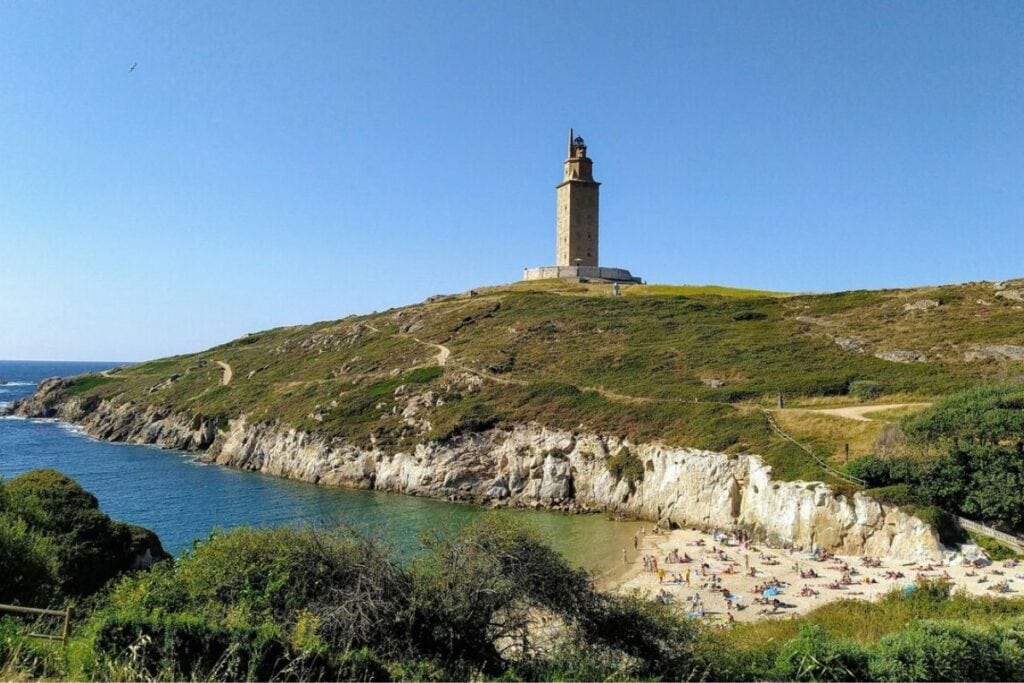
Most walkers leave A Coruña from the Church of Santiago in the old town, close to where medieval pilgrims once stepped off their ships. It’s worth arriving a day early to see the Tower of Hercules, the oldest working Roman lighthouse in the world.
| Stage | Route | Distance |
|---|---|---|
| 1 | A Coruña to Sergude | About 20km |
| 2 | Sergude to Hospital de Bruma | About 13km |
| 3 | Hospital de Bruma to Sigüeiro | About 24km |
| 4 | Sigüeiro to Santiago de Compostela | About 17km |
What the walking is like from A Coruña
The route starts as a city walk but turns rural fairly quickly. The first third follows neighbourhood streets out to O Burgo, where a riverside promenade and old mills mark the edge of town. From there, it switches to earth tracks and meadows through parishes like Sigrás, home to the medieval bridge of A Xira. Sergude, about 20km in, makes a natural first overnight stop.
Day two is the hardest. The 13km from Sergude to Hospital de Bruma climbs into the hills, so take it slowly and carry plenty of water. Hospital de Bruma takes its name from a pilgrim hospital recorded back in 1175, and it’s here that you meet walkers coming from Ferrol. It’s a tiny hamlet with little more than an albergue, so don’t count on picking up supplies there.
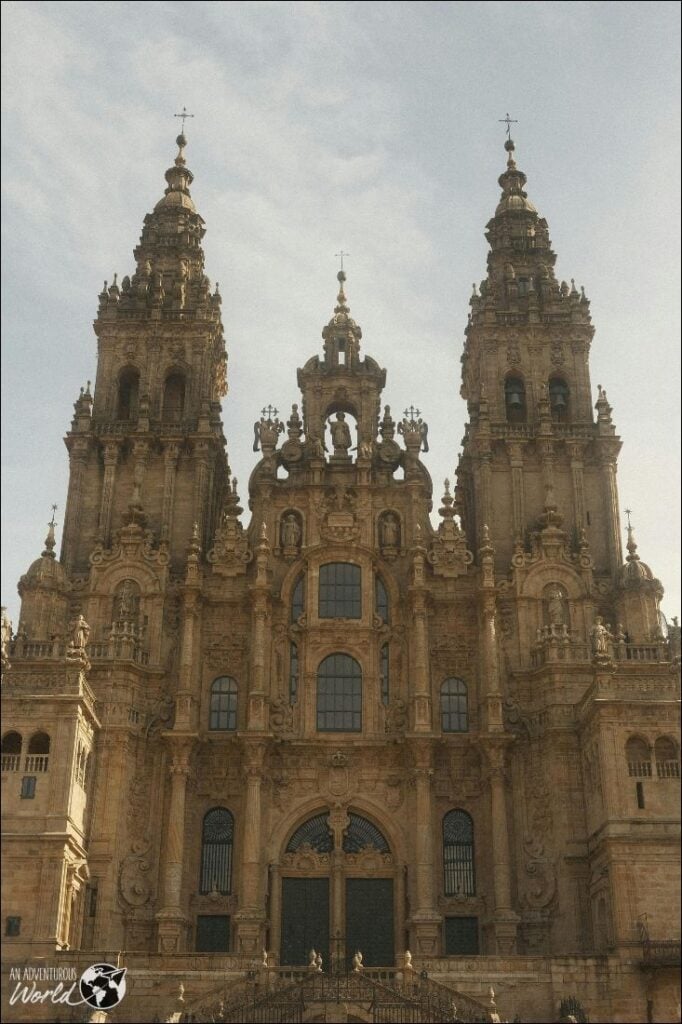
After that, the final two days are longer but much gentler. The path follows rivers and streams through farmland and small villages, crossing the Tambre on a 14th-century bridge at Sigüeiro. The last morning eases you into Santiago’s old town and the Praza do Obradoiro, right in front of the cathedral.
Can you get a Compostela from A Coruña?
The Compostela is the certificate pilgrims receive in Santiago. To earn one, you need to walk at least the last 100km on foot. At around 74km, the route from A Coruña falls short on its own, so starting in Ferrol is the simplest fix if the certificate matters to you.
There’s another option that works perfectly for British walkers, though. Since 2016, the cathedral has accepted pilgrims who start in A Coruña if they’ve already walked at least 25km of a recognised pilgrim route in their home country. You’ll need stamps in your pilgrim passport to prove it.
In the UK, that includes the St James’ Way from Reading to Southampton, the Finchale Camino Inglés in County Durham and the Pilgrims’ Way to Canterbury. Walking a stretch at home before flying out is a lovely way to connect with the route’s history. Rules can change, so check the latest requirements with the Pilgrim’s Office in Santiago before you travel.
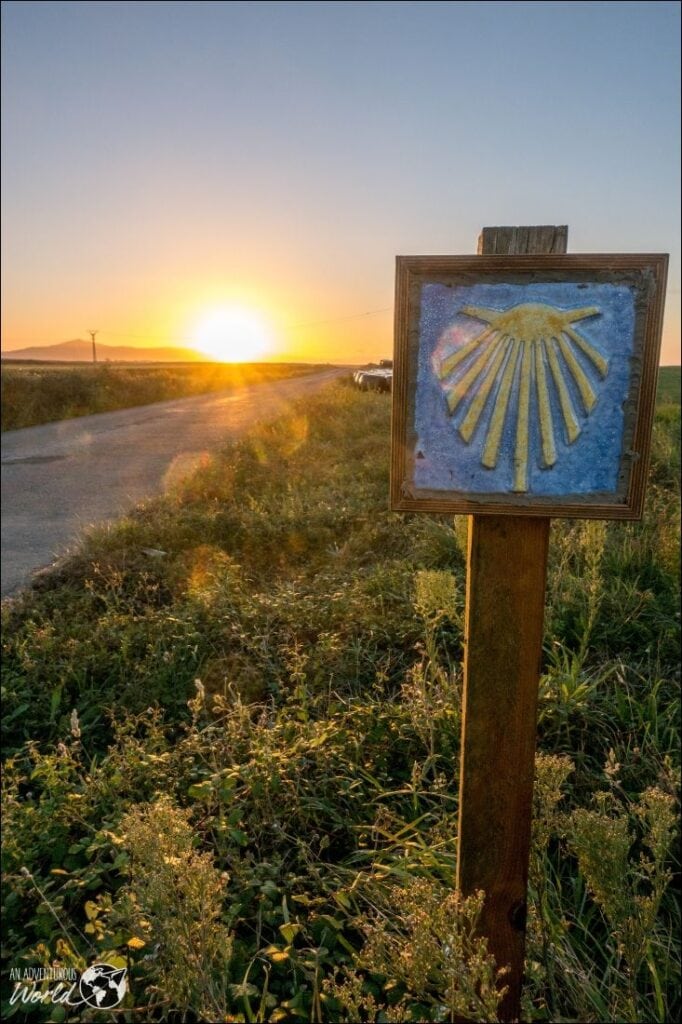
Whichever start you choose, collect at least two stamps a day once you’re in Spain. Churches, cafés, albergues and plenty of bars along the route will happily stamp your passport.
Why walk the Camino Inglés from A Coruña?
The A Coruña route is growing in popularity, and official figures only count walkers who qualify for a Compostela, so plenty more set off from here each year. It’s easy to see the appeal. The Camino Francés gets very crowded in summer, especially the final 100km from Sarria. The English Way gives you that same feeling of arriving in Santiago on foot, without the scramble for beds or a constant stream of walkers ahead of you.
It’s also a well-balanced walk. There’s one properly challenging climb, but the rest is gentle enough to enjoy without serious hiking experience. Best of all, it fits into six days including travel, which makes it ideal for a week-long walking holiday or a first taste of the Camino.
Tips for planning your walk
Flying into Santiago and taking the train up to A Coruña is often the easiest option. The journey takes less than an hour, and you’ll finish right where you fly home from. Spring and early autumn are lovely for walking, but May, August and September are the busiest months across the Camino network. April, June and October tend to be quieter.
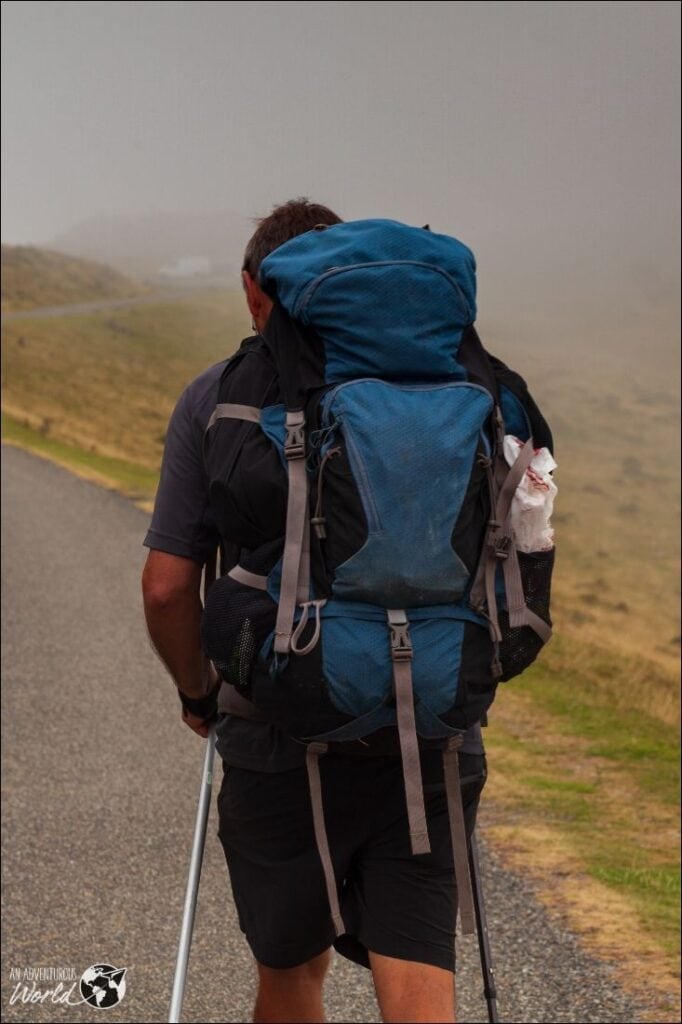
Galicia is famously wet whatever the season, so pack a good waterproof and shoes that dry quickly. Pick up your pilgrim passport before you travel, for example from the Confraternity of St James. Accommodation ranges from simple public albergues to small hotels and rural guesthouses. If you’d rather not carry a full pack, luggage transfer between stops is easy to arrange and takes a lot of strain off your shoulders.
Planning your own walk to Santiago? My guide to where to stay on the Camino de Santiago includes the Parador on the Praza do Obradoiro, which is a brilliant place to celebrate at the finish. If you want to get some miles in your legs beforehand, these hikes near London make great training walks.