
This post contains product affiliate links. These are mainly on items/hotels/tours that I personally endorse & love. I may earn a small commission if you make a purchase, but at no extra cost to you.
Discover the best safari options in Sri Lanka – from half-day to full-day tours, come and find out which is the best one for you!

One of the reasons Sri Lanka is such an amazing country to visit is all the animal encounters you can have. There aren’t many places in the world where you can see elephants and whales in the same day (not at the same time mind you…), but here you can. And that’s not mentioning all the water buffalo, cheeky monkeys and lumbering monitor lizards you’ll see every day while walking around. In short, if you like animals then you’ll love it here!
If you’re planning a trip to Sri Lanka, one of the questions you’ll be asking yourself is whether to do a half-day or full-day safari. Don’t worry, you’re not alone! I was exactly the same, and having done both I think I’ve got a good idea which one is better. We’ll get more onto that later.
In this blog post I’ll also tell you where I think the best places to go on safari are, and some other top tips too. You’re not short of options, so it’s always best to do your research depending on what type of experience you want. But first things first, what’s the difference in a half-day and full-day safari (other than time that is…)
If you’re looking for some more Sri Lanka tips, especially if you’re travelling with kids, then check out my blog post here. You can also read my Sri Lanka budget guide here.
Half-day or full-day?
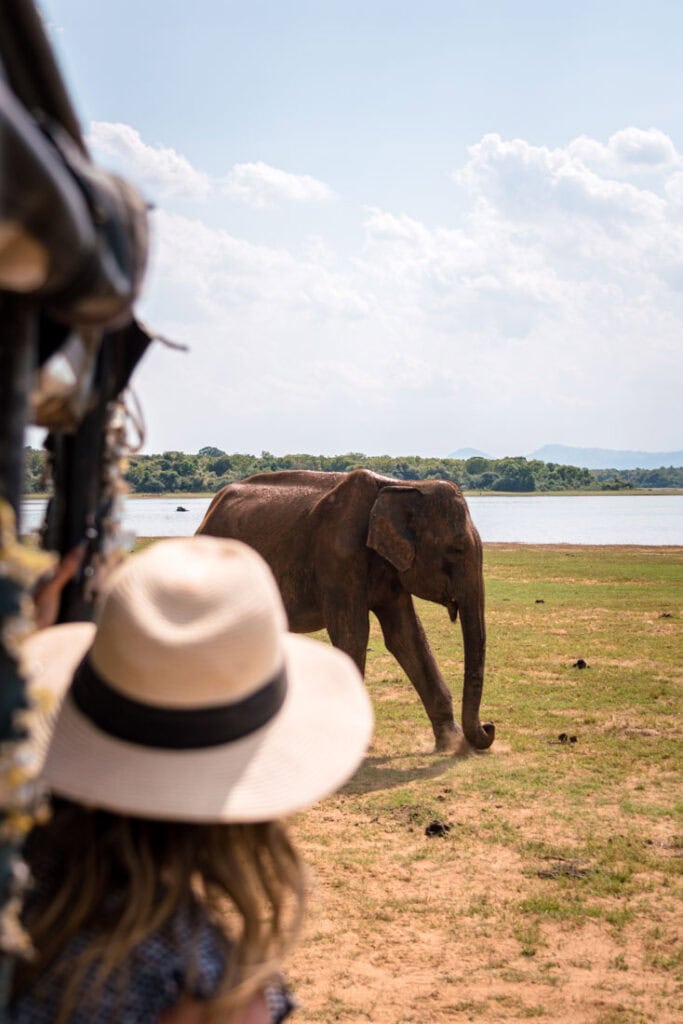
If you only want to see elephants, a half-day safari is plenty. If you’re after leopards, or you want to get away from the crowds, I’d do a full day every time. On a half-day you get around two to three hours in the park. On a full day it’s closer to six, and that extra time is what gets you to the parts of the park the morning rush never reaches.
| Half-day safari | Full-day safari | |
|---|---|---|
| Time in the park | 2 to 3 hours | Around 6 hours |
| Pickup | 5:30am, or early afternoon for a sunset safari | 5:30am |
| Food | Breakfast box on morning safaris | Breakfast and lunch |
| Best for | Elephants, young kids, tight itineraries | Leopards, photography, avoiding the crowds |
Half-day safari

Half-day safaris are by far the more popular option all over the country. They’re a lot cheaper and take less time, so it’s a bit of a no brainer, right? Most tour companies sell the half-day safari on the fact that you’re more likely to see animals at sunrise and sunset when they’re at their most active – all the guides will say the animals sleep during the day, so there’s not much point going out at midday.
Also, Sri Lanka can get very toasty during the day, so going out a sunrise or sunset is a way to beat the heat. You can see elephants in the morning, and still be at your sun lounger by 10am. Sounds lovely. It all makes sense up until this point, so why would anyone do a full-day safari?
Another thing to point out is the full-day safari can be exhausting. Up a sunrise, in a dusty truck all day. It can be a long hot day, but it can be incredible rewarding too.
Full-day safari

When Chloe and I were deliberating which tour to do on our honeymoon, we opted for a full-day elephant safari tour in Udawalawe National Park. Our reasoning was we’re only here once, so let’s maximise the time we’ve got seeing elephants and other animals. It was the best decision we made, and it was one of the best days of our honeymoon by far.
No matter what tour you choose, you’ll see a lot of other safari trucks – there are dozens on each tour, and it comes with the territory I’m afraid. But on a full-day tour you’ll get to go places you just don’t have time to get to on a half-day safari.

When we did an elephant safari in Udawalawe, we watched all the safari trucks turn left as we were the only truck to turn right. All of a sudden, we were all alone with loads of elephants surrounding us – we never would’ve had that on a half-day safari. I can’t tell you how peaceful it was watching all the elephants without any other trucks, and it really did feel like we had the reserve to ourselves. The whole day was like that.
On our most recent trip we did a half-day morning safari in Yala National Park looking for leopards (this is the tour we did). Unfortunately, we went back to our hotel with our tails between our legs because we didn’t see any. At breakfast I overheard a couple talking saying they went on a full-day safari the day before and only saw leopards in the afternoon – I was kicking myself! As I said, if you’re there looking for animals, then it’s best maximising your time to do that by going on a full-day safari.
What is the price difference?

Obviously one of the main differences is in price, and what catches people out is that most safari prices don’t include the park fee. You’re really paying for two things: the jeep and driver, and your ticket into the national park.
If you book a seat in a shared jeep online, a half-day safari starts at around $20 to $35 (about £15 to £26) per person. It’s cheaper to sort it through your hotel. A whole jeep for up to six people costs LKR 7,500 to 10,000 (about £17 to £22) for a half-day, and a full day is usually double that. In comparison, the full day safari is £65/$85 per person, but it was really worth the money. It’s a full day activity, so I actually think that’s really good value for money.
On top of that comes the park fee. At Yala it’s $25 (about £19) per adult and $15 for children aged 6 to 12, and under-6s go free. There’s also a $10 group fee per jeep and 18% tax on the lot. So two adults sharing a jeep at Yala pay around $70 in park fees, and that’s before you’ve paid for the jeep itself.
All the national parks are open from 6am to 6pm. The ticket counters close at 4pm though, so don’t leave an afternoon safari too late.
One of the things I would mention is the half-day safari can be very misleading. It’s not a half-day, but more like 4 hours. Once you factor in driving to and from the national parks, getting your permits, and it’s more like 2 hours of actual safari time. Usually this is enough to see elephants and other animals, but there is a lot of time spent travelling.
The timeline is usually:
5am – wake up
5:30am – be picked up for your safari
6am – get to the national park entrance
6-7am – rrivers queue at the gate for the day’s permits, and if you’re not near the front it can be a really frustrating waste of time. The good news is you can now buy your park tickets in advance through the Department of Wildlife Conservation’s online e-permit system. It covers Yala, Udawalawe, Minneriya, Kaudulla, Wilpattu and Horton Plains. Ask your driver whether it’s worth doing before you go. Everyone is in the same boat (or truck as it were), but you have been warned.

7-9am – safari time. This can obviously be longer depending on when you got your permit, and some trucks leave slightly later, but I would say you get a minimum of 2 hours safari time on the morning or afternoon safari.
9:30-10am – back at your hotel, sometimes in time for a second breakfast.
Compare that to a full-day safari where you spend 6 hours on actual safari. I think it’s easy to see which one is better value for money.
Planning a trip to Sri Lanka? Make sure you check out my Sri Lanka budget guide. This article is packed full of information on how much everything costs. Please use it as it really can help budget your trip.
Is food included?

Yes, food is included if you do the morning or full-day tour. It’s not included in the afternoon/sunset tours as these often start at 3pm, so you don’t miss any meals.
For breakfast, because they’re catering to so many different nationalities, your breakfast box usually contains a cheese sandwich, a hard-boiled egg, a couple of small sausages, a yoghurt, an apple and some biscuits. It’s not the most inspiring meal, especially at 6am.
Saying that, you can ask for a Sri Lankan breakfast which is usually roti and daal, which is much better option in my opinion.
Where are the best safaris in Sri Lanka?

As I mentioned, I’ve done a few safaris in Sri Lanka now, so I feel like I have a good idea of where the best safaris are. I would always take this with a fist sized pinch of salt though – all experiences are subjective.
Sometimes you’ll get lucky and see a family of leopards, so you think it’s the best safari ever, whereas other times you’ll only see some green bee-eaters (a particularly beautiful bird). Apples and pears. I’ve tried to be as objective as I can and I’ve explained each place below.
Udawalawe National Park
If you’re looking for big herds of elephants, then this is the place for you. I honestly lost count of how many elephants we saw here, but it was well over 50-100. One of the things I really liked about Udawalawe was the landscape – they were wide open vistas often with lakes and waterholes for the elephants. Just beautiful. We also saw lots of water buffalo and crocodiles on this tour. This is the tour we did – Udawalawe National Park Tour.
Habarana
This is one of the most popular spots to base yourself for an elephant safari. Being just 4-5 hours from Colombo, it is very easy to get to, and it’s really well set up with a number of lovely hotels to stay at. I’ve done the Hurulu Eco Park sunset safari here and it was brilliant. We saw loads of elephants, and it was magical seeing them bathed in that golden glow just before sunset. We also saw a good number of birds such as the green bee-eater. This is the tour we did – Hurulu Eco Park Tour.
Habarana is also the base for Minneriya and Kaudulla National Parks. Every dry season, hundreds of elephants gather on the shores of the Minneriya reservoir. It’s known as The Gathering, and it usually peaks in August and September. The herds move between Minneriya, Kaudulla and Hurulu Eco Park depending on where the water is, so don’t stress about which one to choose. Your driver will know where the elephants are that week.

Yala National Park
If you want to see leopards, then this is considered the best place to do it. That’s the big selling point of Yala, but you can see plenty of other animals here too. The best time to see leopards is in the dry season, roughly February to July. That’s when the bush thins out and the animals have to come out to the waterholes. Unfortunately we didn’t see any leopards on our morning tour, but we did see elephants, crocodiles, deer, a mongoose and loads of birds like the Malabar pied hornbill. A lot of people see wild boar here too. My only negative about Yala is that it’s a lot more enclosed with scrubland and trees. It’s very different to other national parks – I just prefer the wide-open views! This is the tour we did – Yala National Park Tour.
Wilpattu National Park
I haven’t made it to Wilpattu yet, but it’s top of my list for next time. It’s Sri Lanka’s largest national park, and it has leopards and sloth bears without the jeep jams you get at Yala. The catch is that the wildlife is spread out over a huge area, so sightings are less frequent. That’s exactly why I think it suits a full-day safari. It’s less than 40km from Anuradhapura, so it’s easy to add on if you’re exploring the Cultural Triangle.
When is the best time to go on safari in Sri Lanka?
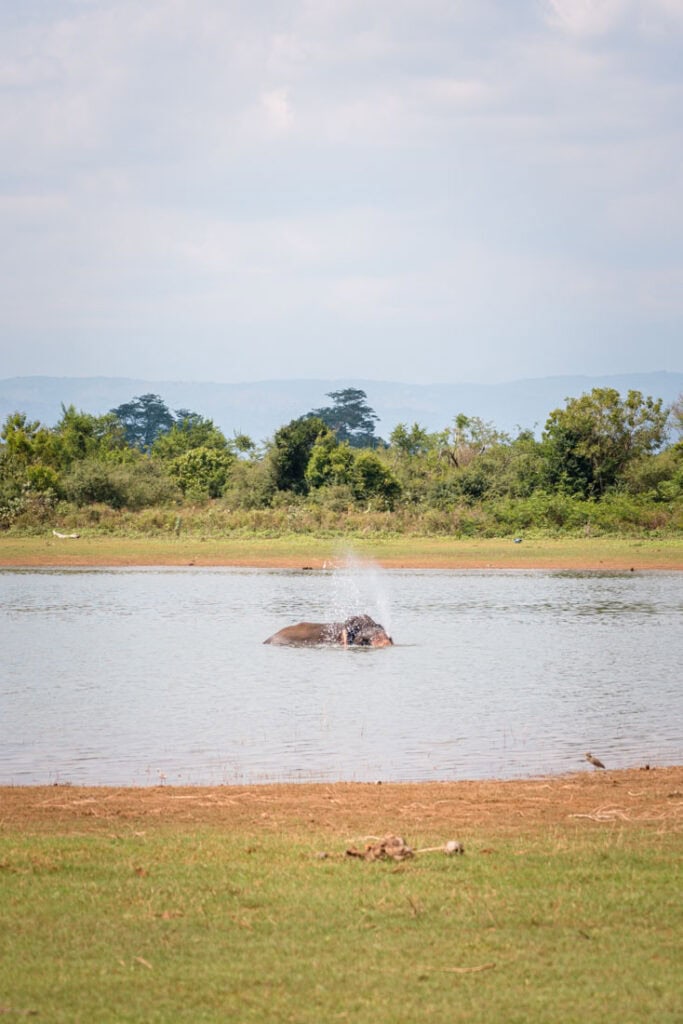
You can go on safari in Sri Lanka all year round, but each park has its own sweet spot. The dry season is generally best, because the grass dies back and the animals have to come out to drink.
The one thing to plan around is Yala. Blocks 1 and 2, where most of the leopards are, close for around a month each year when the drought is at its worst. In 2026, they were shut from 14 September to 15 October. The rest of the park stayed open, but check before you book.
If you want to see elephants and whales on the same trip, go between December and April, which is whale-watching season off Mirissa. It overlaps nicely with good safari conditions in the south.
| Park | Best for | Best time | Good to know |
|---|---|---|---|
| Yala | Leopards, sloth bears | February to July | Blocks 1 and 2 usually close for a month from mid-September |
| Udawalawe | Big herds of elephants | All year | Elephant sightings are reliable whatever the month |
| Minneriya and Kaudulla | The Gathering | July to October | Peaks in August and September, then moves to Kaudulla |
| Hurulu Eco Park | Elephants with fewer jeeps | All year | Herds are often biggest around December and January |
| Wilpattu | Leopards without the crowds | February to October | Huge park, so sightings are spread out |
Can you take kids on a safari in Sri Lanka?
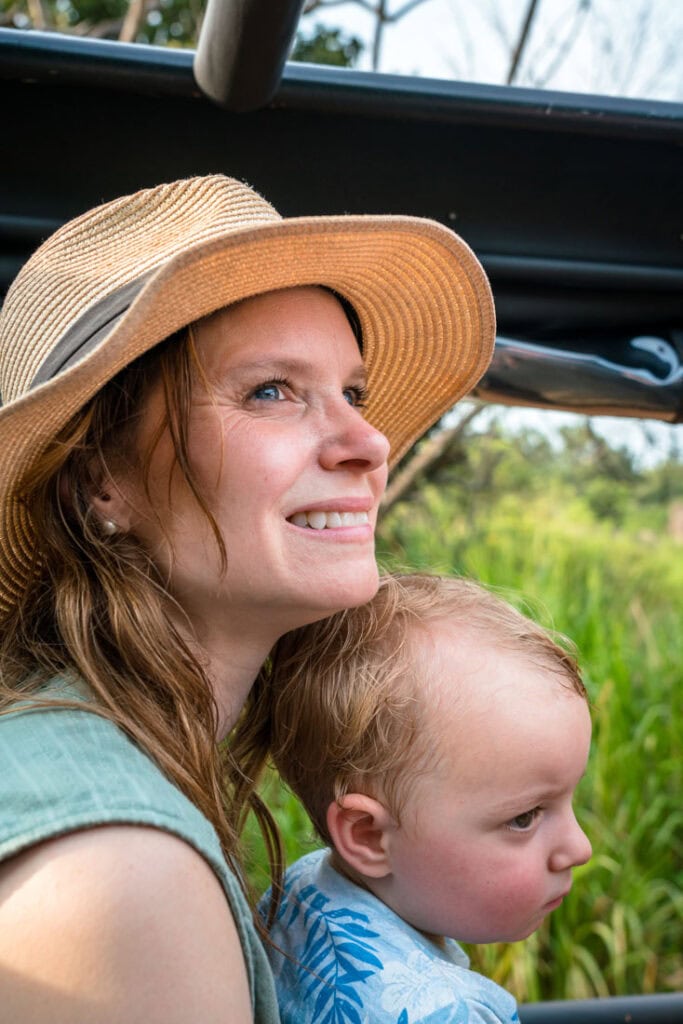
Absolutely. We took Cooper on his first safari in Habarana when he was two. It was such a special day for us as a family. Here’s what I’d bear in mind.
- Under-6s go free into the national parks, and children aged 6 to 12 pay a reduced rate.
- For little ones, I’d go for a half-day or an afternoon sunset safari, because a full day is long and hot for a toddler.
- Once you’re in the park, you can’t just hop out of the jeep. You’re only allowed out at a few designated stops, so go to the toilet before you leave and ask your driver where the breaks are. On a full-day safari at Yala, the midday stop is usually at Patanangala beach.
- Book a private jeep if you can. You can stop whenever you need to, and you’re not holding anyone else up.
- Take more water and snacks than you think you need, plus hats and sun cream. A pair of binoculars is brilliant for keeping kids interested too.
What about all the trucks?

If you hadn’t figured it out yet, there are quite a lot of other trucks on these tours! At times it can be pretty overwhelming, especially when you see 10+ trucks crowded around a few elephants. Saying that, all the trucks do well at dispersing around the parks, and you will definitely have moments when there are no other trucks around no matter what tour you do.
All the drivers/guides are very relaxed, so if you’re in a truck with your family or friends, you can say you want to park up for 5-minutes of chill time. We did this a couple of times on our tours and it was lovely, so I’d definitely recommend that.

If you want to avoid the queue at Yala’s main Palatupana gate, ask your driver about going in through the Katagamuwa entrance instead. It gets you into the same leopard territory in Block 1. Only around 20 to 30 jeeps use it, compared with more than 200 at the main gate.
Also, the elephants are very used to the trucks. It’s still very much their habitat, so if they don’t want you around, they’ll let you know, but you get a sense that the trucks don’t bother them much.
What safari is right for you?

After going on a few different safaris in Sri Lanka, I can honestly say they’re all incredible. Even though we didn’t see any leopards in Yala, I still loved being on safari and seeing so many different animals.
A lot of it comes down to time. If you’ve got the time, then I really recommend the full-day safari to get the complete experience. The most important thing is adding a safari to your Sri Lanka itinerary!
If you have any questions about any of the safaris in Sri Lanka, or if there’s anything I’ve missed, you can let me know in the comments below and I’ll get back to you.

On a full day Yala excursion with kids, what bathroom stops are included?