This post contains product affiliate links. These are mainly on items/hotels/tours that I personally endorse & love. I may earn a small commission if you make a purchase, but at no extra cost to you.
What does a two week family holiday to Sri Lanka actually cost? Full budget breakdown covering accommodation, transport, food and attractions.
I’m not going to say my favourite reason for loving Sri Lanka is because it’s cheap, but it’s definitely up there. I’m an old-school backpacker. I travelled around the world for 2 years straight, and budget was everything. The more money I saved, the longer I could travel. It was as simple as that.
Well, that mentality has always stuck with me. Thankfully, Sri Lanka is an amazing budget destination. Your money genuinely goes a long way here. You can get gorgeous hotels at £30 a night. If you want to eat on the cheap, street food can be £1 a dish.
Not that this is exactly a fair comparison, but the first time I went to Sri Lanka was on my honeymoon with Chloe (before kids I might add!) We went to the Maldives before that to be all fancy pants and review a hotel there. But after that, we stayed on for two nights and paid for everything. Well, we spent more two nights in the Maldives than in over two weeks in Sri Lanka. The thing is, Sri Lanka does 5* luxury too, just at a fraction of the cost. Give me Sri Lanka over the Maldives any day of the week.
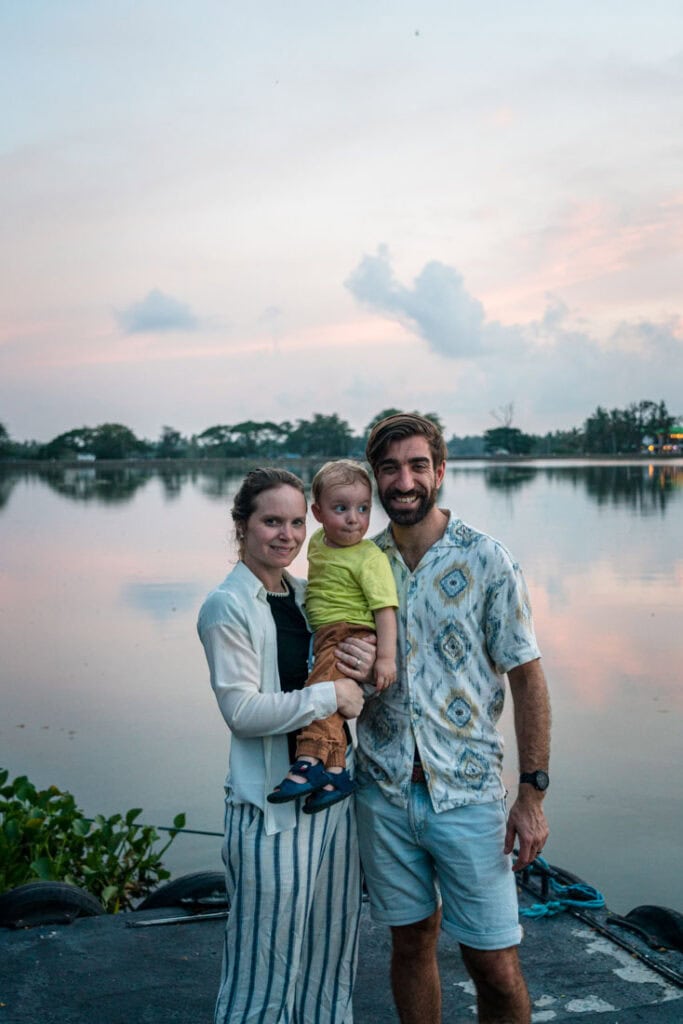
On my most recent trip to Sri Lanka, we spent two weeks travelling around with our son. You can read all about it in my Sri Lanka itinerary here. In this article, I wanted to tell you how much we spent. I think budget guides like this are really important when planning your trip and how much money you actually need.
From accommodation to transport, I’ll go through how much things cost, and how much you need to budget for your holiday. Sri Lanka is such an amazing country, so hopefully this guide will help plan your trip here.
Contents:
How I spent two weeks in Sri Lanka
When you look at a map and see Sri Lanka dwarfed by its Indian neighbour, you might think it’s quite a small country and easy to get around. Wrong. Sri Lanka is surprisingly big, but one of the reasons it’s difficult getting around is infrastructure. Most people travel by car/taxi, and the roads aren’t the best. Because of that, journey times can be long.
That’s why the majority of tourists just stick to a circular loop around the south and centre of the country. Not many tourists make it north (me included). I won’t go into major detail, for that you can read my Sri Lanka guide, but here’s my general itinerary.
| Days | Base | Don’t miss | Where we stayed |
| 1–2 | Colombo | Lotus Tower, Kelaniya Temple | Cinnamon Life |
| 3–5 | Habarana | Elephant safari, Sigiriya, Anuradhapura | Cinnamon Lodge |
| 6–7 | Kandy | Temple of the Sacred Tooth Relic | The Radh |
| 8–9 | Ella | Little Adam’s Peak, Nine Arches Bridge, tea factory | Morning Dew |
| 10–11 | Udawalawe | Full-day elephant safari | Eliyanth Udawalawe |
| 12–13 | Mirissa | Beach, Coconut Tree Hill, whale watching | D Canal House |
| 14 | Galle | Galle Fort | The Fort Printers |
I know it looks like a lot. What can I say, we really love packing things in. But this should give you a good overview of what a two-week trip to Sri Lanka can look like.
What is the currency in Sri Lanka
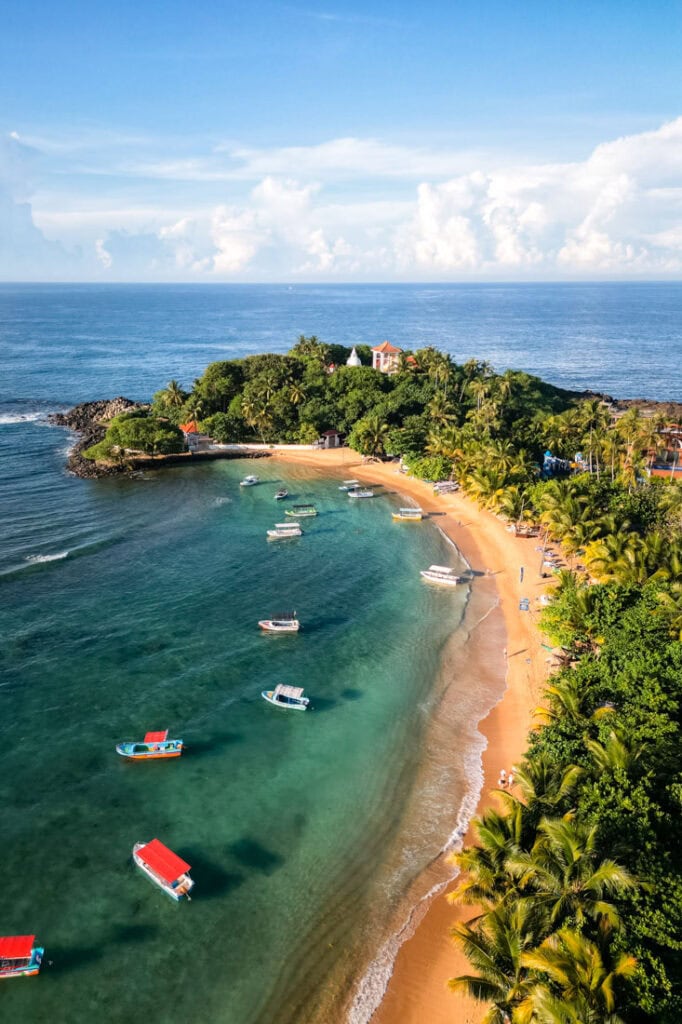
The currency in Sri Lanka is the Sri Lankan rupee, written as LKR or Rs. At the time of writing, you get around 450 rupees to the pound, so a 1,000 rupee note is roughly £2.20.
Notes come in 20, 50, 100, 500, 1,000, 2,000 and 5,000 rupees, with coins for the smaller amounts. Break the big notes whenever you get the chance, because tuk tuk drivers and roadside fruit stalls almost never have change for a 5,000.
Outside the main cities, Sri Lanka still runs on cash. Cards work fine in hotels and smarter restaurants, but plenty of places add a surcharge for paying by card, and a lot of guesthouses and cafes don’t take them at all. We took cash out every few days and never had a problem.
ATMs are easy to find in Colombo, Kandy and the main beach towns, though they thin out quickly in the hill country and around the national parks. Bank of Ceylon and People’s Bank machines tend not to charge a withdrawal fee. And always choose to be charged in rupees rather than pounds, otherwise you’ll get a rotten rate.
What should a family of four budget per day?
These are rough working numbers for two adults and two children, excluding flights obviously.
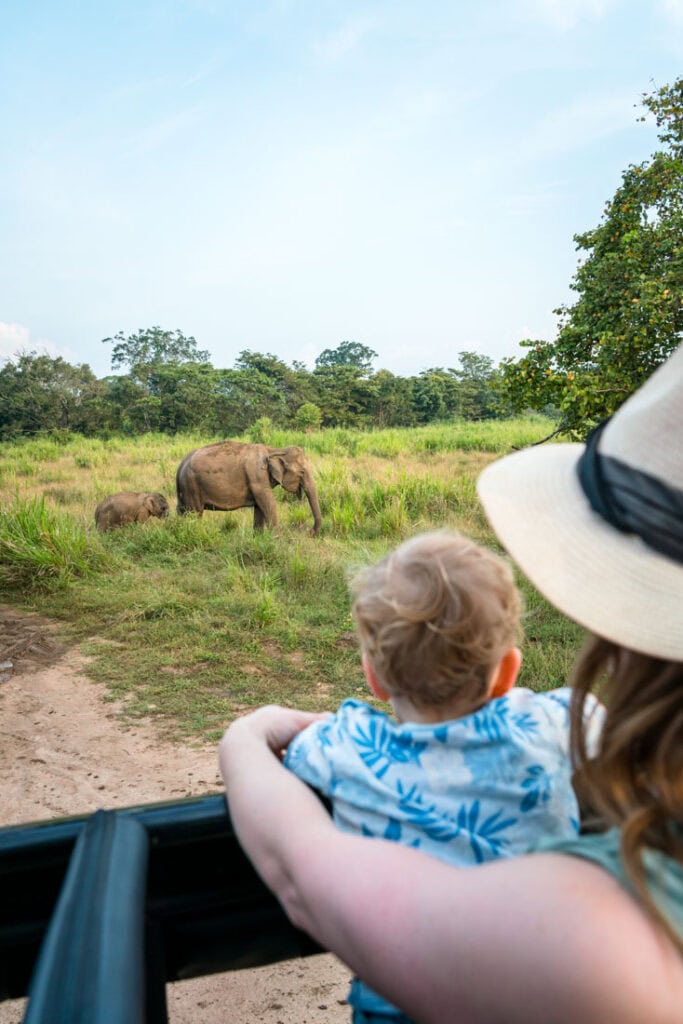
Now, I’ll add this as my headline fact, but under-6s are basically free in Sri Lanka. All sites and attractions don’t charge entrance fees for kids under 6, so you can make a big saving there already. I know a lot of places around the world don’t charge for kids, but I feel like it’s more like 3 or 4 you have to start paying. The fact you can go to Sri Lanka with a 5-year-old and not pay for any attractions is a pretty sweet deal in my eyes.
| Budget style | Per day (GBP) | Per day (USD) | Per day (LKR) | Two weeks (GBP) |
| Doing it cheaply | £80 to £95 | $110 to $130 | ₨36,000 to ₨43,000 | £1,100 to £1,350 |
| Doing it comfortably | £150 | $200 | ₨67,500 | £2,100 |
| Doing it properly | £260+ | $350+ | ₨117,000+ | £3,650+ |
Doing it cheaply: £80 to £95 a day
Guesthouses instead of hotels, tuk tuks and buses instead of a private driver, eating local most days. Over a fortnight that’s £1,100 to £1,350, or about $1,500 to $1,800 (₨500,000 to ₨600,000). It’s entirely doable and plenty of families do exactly this. You’ll spend more time working out logistics and less time by a pool, but the trade-off is a trip that costs less than a week in Cornwall.
Doing it comfortably: £150 a day
This is where we landed. A decent family room with a pool, a driver for the days you’re moving between places, breakfast at the hotel, a mix of local lunches and proper dinners out, and the entrance fees averaged across the fortnight. Two weeks comes in around £2,100, or about $2,800 (₨945,000).
Doing it properly: £260+ a day
Boutique hotels, a driver for the whole fortnight, private safaris, a couple of nights somewhere genuinely fancy. Two weeks at this level is £3,650 and up, or roughly $4,900 (₨1.64 million). Sri Lanka does high-end brilliantly and it still costs a fraction of what the equivalent would in the Maldives.
Accommodation
| Type of stay | Per night (GBP) | Per night (USD) | Per night (LKR) |
| Guesthouse or homestay family room | £20 to £40 | $27 to $55 | ₨9,000 to ₨18,000 |
| Mid-range hotel family room, usually with a pool | £45 to £90 | $60 to $120 | ₨20,000 to ₨40,000 |
| Boutique hotel, villa or tea bungalow | £110 to £180 | $150 to $245 | ₨50,000 to ₨80,000 |
| Luxury resort or tented safari lodge | £220+ | $300+ | ₨100,000+ |
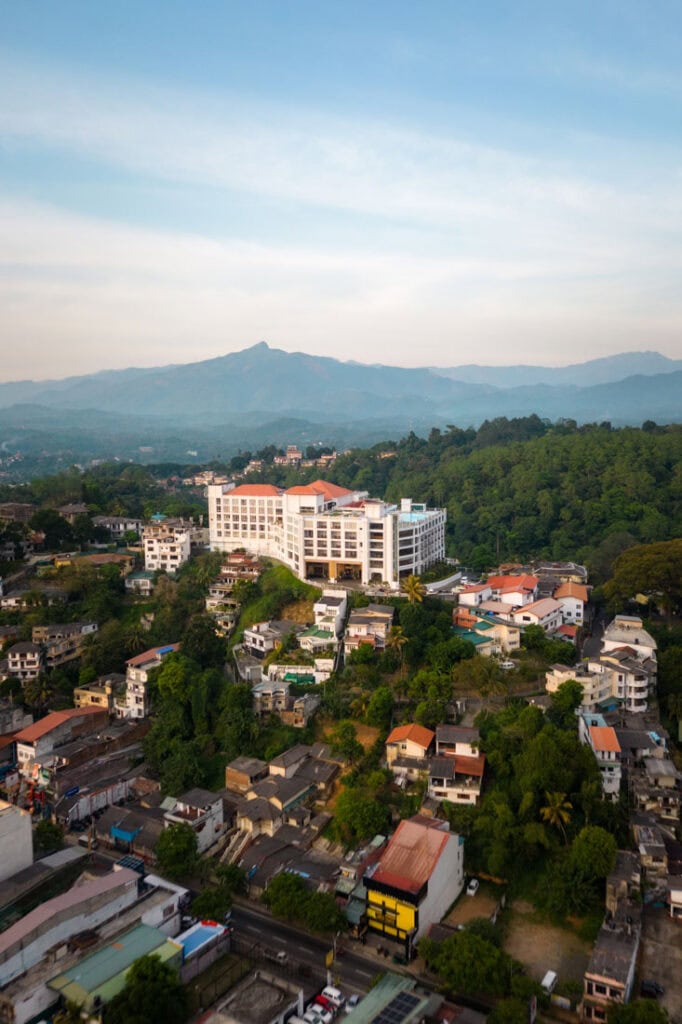
As always when budgeting a trip, accommodation is where the majority of your money can go. £100 a night for 14 days = £1,400. I can add up quickly. Luckily, Sri Lanka has plenty of options for all types of traveller.
At the budget end you’re looking at guesthouses and homestays. Clean, simple, fan or basic air con, and usually a fantastic breakfast made by whoever owns the place. We stayed in a few of these and they were consistently the friendliest nights of the trip.
Mid-range is the sweet spot with kids. For £45 to £90 you get a proper family room, air con that works, a pool the children will refuse to leave, and breakfast included. That’s what most of our fortnight looked like. I will say this, having a pool is pretty much a must when travelling with kids in Sri Lanka. It can get super hot, so having a cool place to retreat to each day is like an oasis in the desert.
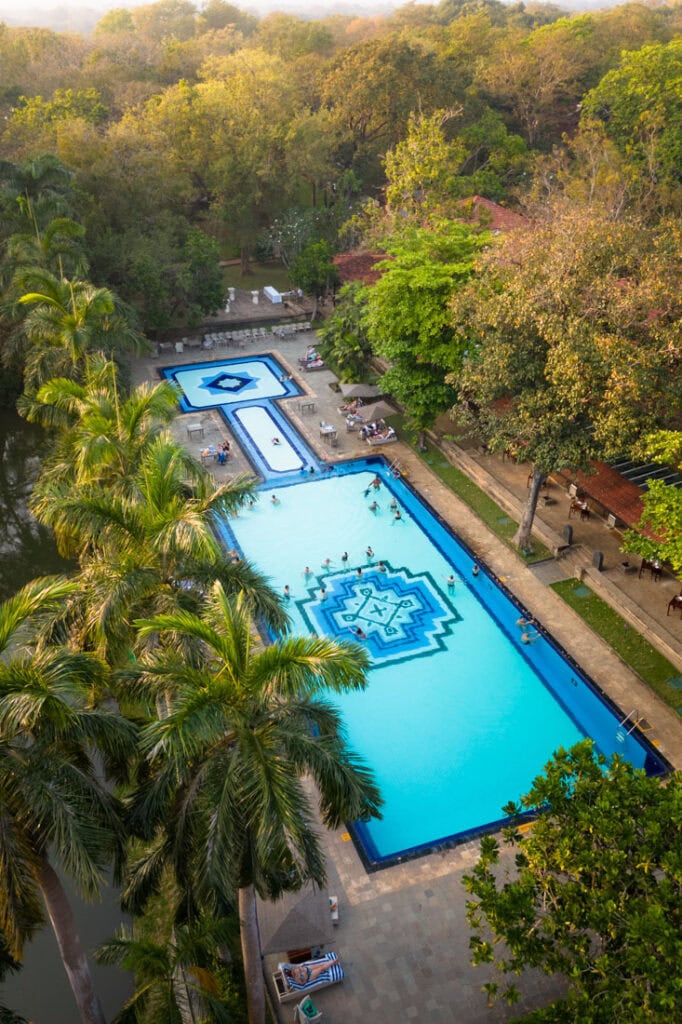
Boutique hotels is where Sri Lanka starts showing off. Colonial-era tea bungalows in the hills, villas inside Galle Fort, that sort of thing. Worth doing for two or three nights even if the rest of your trip is mid-range.
Then there’s the top end, the tented lodges near Yala and the cliff-top resorts on the south coast. Expensive by Sri Lankan standards, but a fraction of what the same thing costs in the Maldives or elsewhere.
I’ve put all the places we stayed at in my itinerary at the top if you’re looking for personal recommendations of where to stay. There’s a good mix in there for all types of budget.
Activities
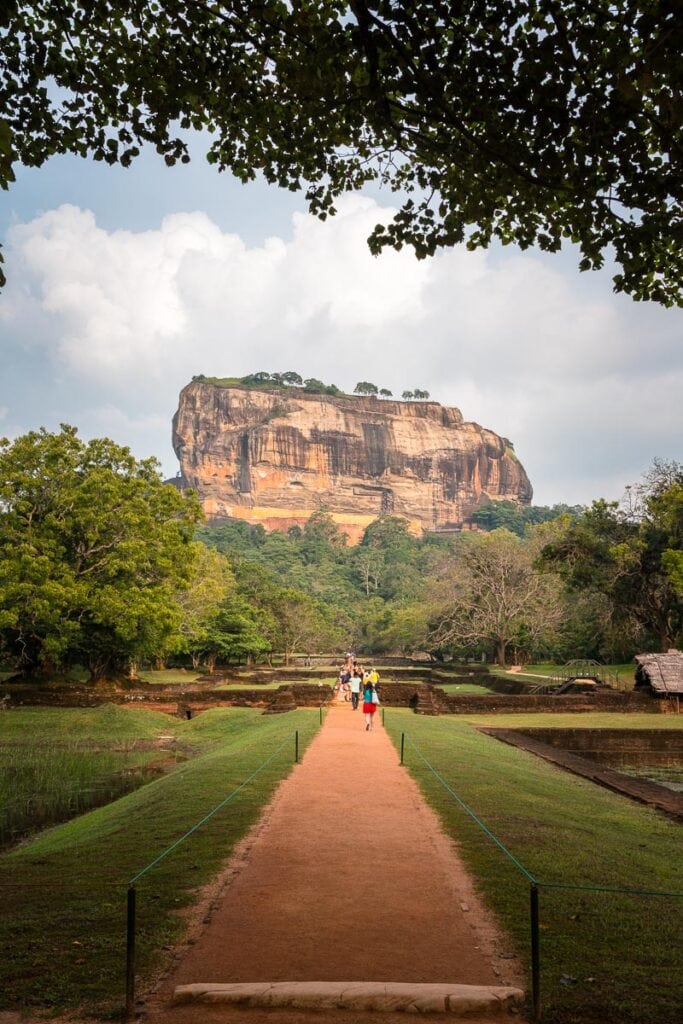
This is the one thing nobody warns you about. Food is cheap, tuk-tuks are cheap, a very nice hotel is cheap. But the big-ticket sites charge foreigners a completely different rate to locals, and if you’ve got four of you, it stacks up fast. As an example, Sigiriya is £26 per person, which is actually quite expensive for Sri Lanka and the same as your hotel for the night. So, here’s exactly what we paid, and what you should budget.
Entrance fees
These are the official rates. Sites quote in dollars but you pay in rupees at whatever rate is chalked up at the gate that morning, so the GBP and LKR figures below are approximate.
| Where | Adult | Child | Under 6 |
| Sigiriya (Lion Rock) | £26 / $35 / ₨11,700 | £15 / $20 / ₨6,700 (6 to 12) | Free |
| Pidurangala Rock | £2 / $3 / ₨1,000 | £2 / $3 / ₨1,000 | Free |
| Dambulla Cave Temple | £4.50 to £7.50 / $6 to $10 / ₨2,000 to ₨3,400 | Half the adult rate (6 to 12) | Free |
| Polonnaruwa Ancient City | £22 / $30 / ₨10,000 | — | Free |
| Anuradhapura | £22 / $30 / ₨10,000 | — | Free |
| Udawalawe National Park | £30 / $40 / ₨13,420 | £12 / $16 / ₨5,450 (6 to 12) | Free |
| Yala National Park | £33 / $45 / ₨15,000 (all in, per person sharing a jeep) | Roughly half | Free |
| Horton Plains National Park | £22 to £30 / $30 to $40 / ₨10,000 to ₨13,500 | Roughly half | Free |
| Pinnawala Elephant Orphanage | £6 / $8.50 / ₨2,800 | £3 / $4 / ₨1,250 | Free |
| Royal Botanic Gardens, Peradeniya | £8 / $10.50 / ₨3,540 | £4 / $5 / ₨1,770 (6 to 12) | Free |
| Lotus Tower, Colombo | £15 / $20 / ₨6,700 | £7.50 / $10 / ₨3,350 | Free |
| Temple of the Sacred Tooth Relic, Kandy | £4.50 / $6 / ₨2,000 | — | Free |
| Halpewatte Tea Factory, Ella | £1 to £4 / $1.50 to $5 / ₨500 to ₨1,700 | — | Free |
| Kelaniya Temple, Colombo | Free (donation) | Free | Free |
| Little Adam’s Peak, Nine Arches Bridge, Ravana Falls | Free | Free | Free |
| Coconut Tree Hill, Mirissa | Free | Free | Free |
| Galle Fort | Free | Free | Free |
The genuinely good news for anyone travelling with little ones: under-6s go free absolutely everywhere. Cooper walked into Sigiriya and Udawalawe for nothing. If you’ve got two small kids, that’s a really big saving right there, and it makes a real difference to a fortnight.
Food & drink
| Item | GBP | USD | LKR |
| Rice and curry at a local place | 70p to £1.50 | $1 to $2 | ₨300 to ₨700 |
| Kottu roti | £1 to £2.50 | $1.50 to $3.50 | ₨500 to ₨1,200 |
| Main course at a tourist restaurant | £3.50 to £7 | $5 to $9 | ₨1,500 to ₨3,000 |
| Dinner for four, mid-range restaurant | £16 to £30 | $22 to $40 | ₨7,000 to ₨13,000 |
| Large bottle of Lion lager | £1 to £2 | $1.50 to $2.70 | ₨500 to ₨900 |
| Coffee at a cafe | £1.50 to £2.50 | $2 to $3.50 | ₨600 to ₨1,200 |
| King coconut from a roadside stall | 25p to 45p | under $1 | ₨100 to ₨200 |
| 1.5 litre bottle of water | 25p to 45p | under $1 | ₨120 to ₨200 |
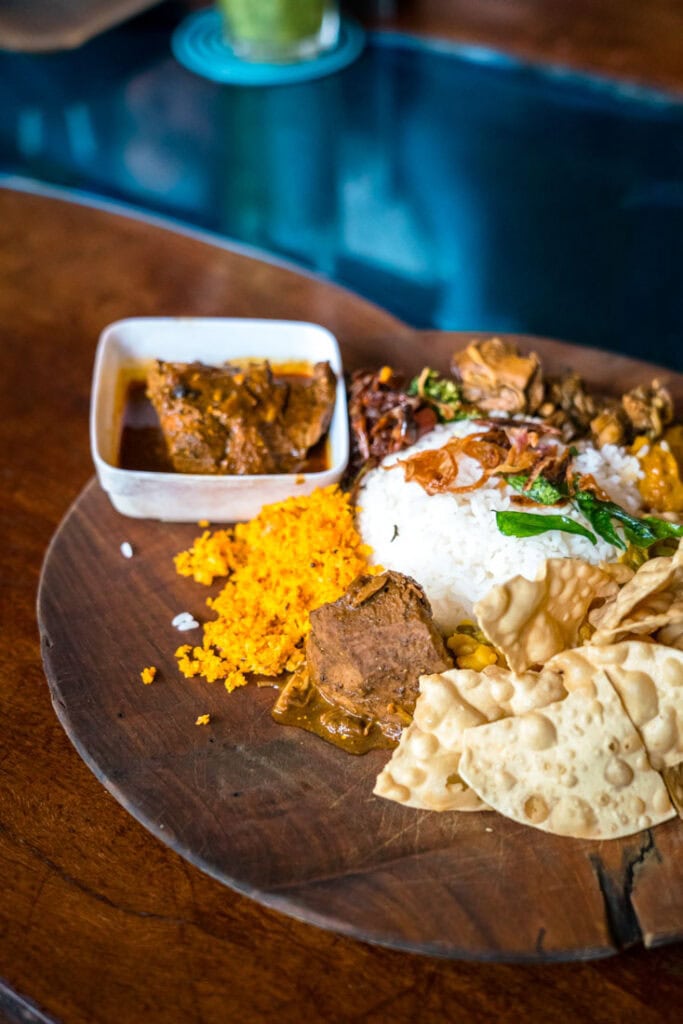
Food is the bit that keeps Sri Lanka affordable, and it’s genuinely brilliant. A rice and curry at a local spot costs about the same as a bag of crisps at home. You get rice with five or six curries around it, and it’s usually the best meal of the day. Even the fussier eaters in our lot found something they liked, because there’s always dhal, always something mild, and the coconut sambol takes the edge off.
Kottu is the other one to try. Chopped roti fried on a hot plate with vegetables and egg, and you’ll hear it being made before you see it. It resembles more of a Chinese noodle dish and it’s yummy. Very kid friendly, and they love watching it being made too.
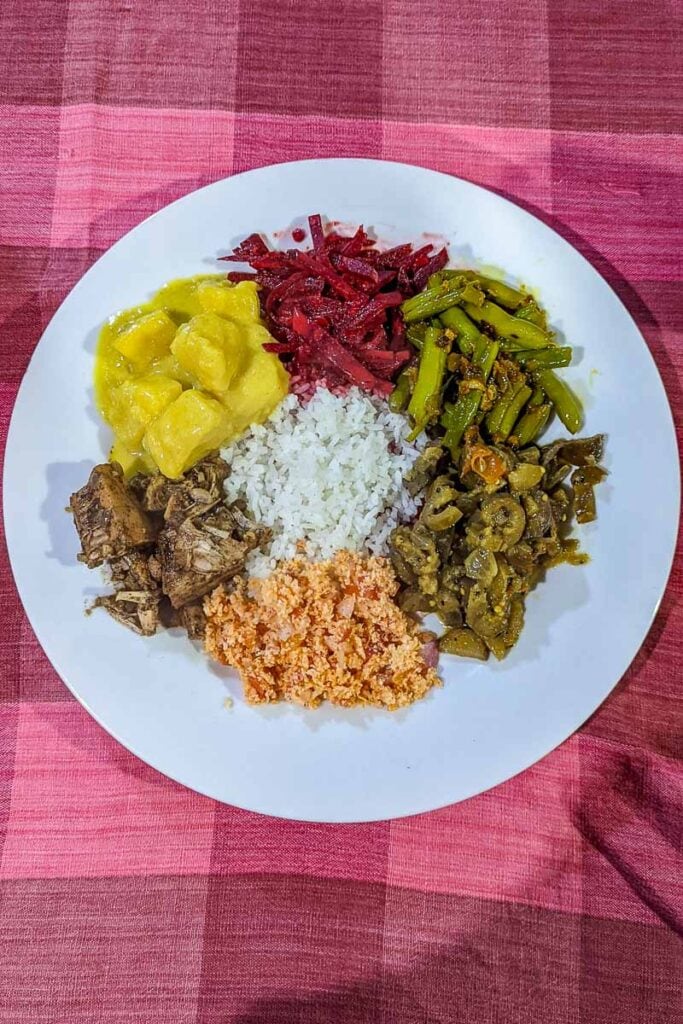
Tourist restaurants cost more, obviously. A sit-down dinner for four in Ella, Galle or Mirissa runs to £16 to £30 with drinks. Still not much, but if you eat every meal that way over a fortnight it adds up fast.
Most hotels include breakfast, which takes one meal off the daily bill entirely. Buy water in the big bottles, refill from those, and grab king coconuts from the roadside whenever you see them. They’re about 30p and better than anything you’ll find in a fridge.
Transport
| Journey or service | GBP | USD | LKR |
| Private car and driver, per day | £37 to £52 | $50 to $70 | ₨17,000 to ₨23,000 |
| Private van and driver, per day (better for four) | £52 to £75 | $70 to $100 | ₨23,000 to ₨34,000 |
| Driver tip, per day | £7 to £11 | $10 to $15 | ₨3,400 to ₨5,000 |
| Tuk tuk, short hop | 50p to £1 | under $1.50 | ₨200 to ₨400 |
| Tuk tuk hired for the day | £11 to £18 | $15 to $25 | ₨5,000 to ₨8,000 |
| Train, Nanu Oya to Ella, second class reserved | £1 to £3 | $1.50 to $4 | ₨400 to ₨1,300 |
| Ella Odyssey tourist train, second class | £7 to £9 | $9 to $12 | ₨3,000 to ₨4,000 |
| Long-distance bus, per person | 50p to £1.50 | under $2 | ₨200 to ₨600 |
For a family of four, my advice is to get a taxi from point to point rather than hiring a driver for the full fortnight. We arranged ours at the hotel the day before we needed to move on, and every single time they had someone local willing to take the trip. No apps, no forward planning, just a word at reception the night before.
It worked out far cheaper than a driver for the whole trip. The maths is simple enough: if you’ve got a driver for 14 days but you’re only actually moving between places on five or six of them, you’re paying for a lot of days where the car sits outside the hotel doing nothing. Booking each leg as you go means you only pay for the journeys you take.
You also get a bit of freedom out of it. If you fall for somewhere and want an extra night, you’re not renegotiating with a driver whose schedule you’ve already committed to.
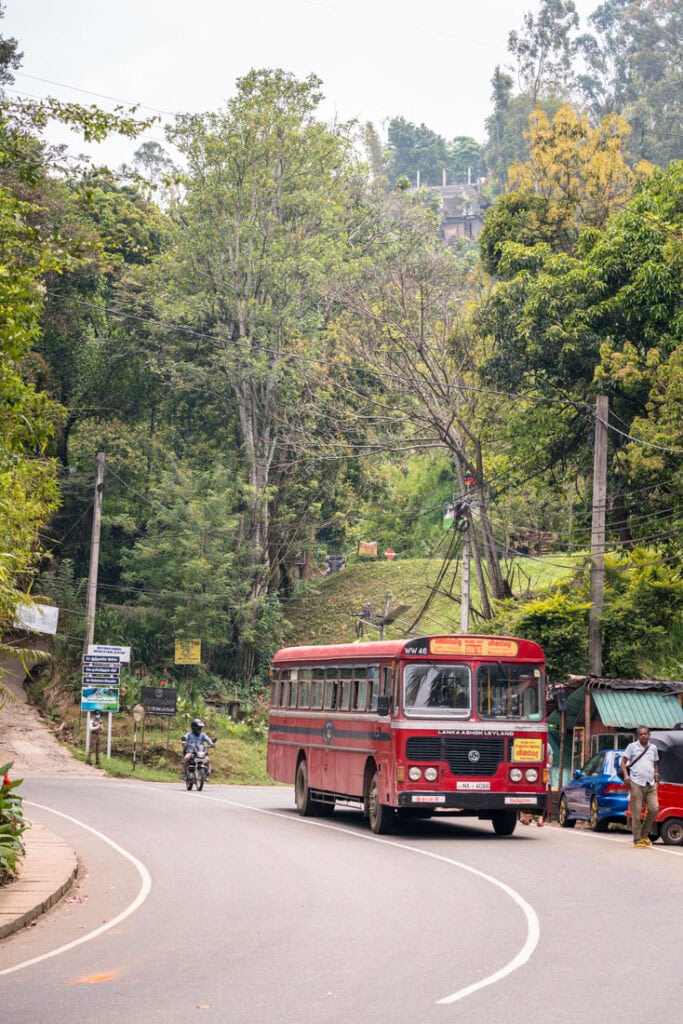
Sri Lankan roads are slow and chaotic, so either way you’ll be very glad you’re not the one driving. But unless you’re moving every couple of days, point to point is the better value.
Tuk tuks handle everything short. Agree the fare before you get in, or use the PickMe app, which meters it properly and removes the haggling entirely.
The train through the hill country is the one journey worth planning around. It costs almost nothing and the kids will talk about it for years. Book reserved seats the moment the window opens, thirty days ahead, because the good carriages vanish quickly.
Buses are cheap and frequent, but with four of you and luggage, they’re hard work.
Money saving tips for Sri Lanka
Some of these are taken from my family travel tips article, but here are some specific money saving tips to help save some money on your travels.
- Book transport as you go, not in advance. Speak to the front desk the evening before you need to move on. Every hotel we stayed at had someone on standby who could drive us, even over long distances. You only pay for the journeys you actually take, and it feels like a more authentic way of getting around anyway.
- Eat street food. Some people avoid it thinking it’s unsafe. I think the opposite. Parippu vada and samosas only really exist as street food, they cost pennies, and they’re some of the best things you’ll eat all trip.
- Take the half board rate if it’s offered. I’m usually against hotel buffets on principle, but Sri Lankan ones are exceptional. Spicy dhal, fresh rotis, black pork curry. With kids it’s doubly useful because there’s always rice and something mild, so nobody goes hungry and you’re not paying for a restaurant dinner every night.
- Always choose to pay in rupees. Card machines and ATMs will offer to charge you in pounds. Decline every time, because the rate they use is dreadful. Same at hotel checkouts.
- Use Bank of Ceylon and People’s Bank ATMs and take out larger amounts less often. They currently don’t charge foreign cards, while others add ₨200 to ₨300 a go.
- Budget for tips separately. They aren’t expected but they’re very much appreciated, and around $5 a day is a fair benchmark for drivers and guides. Better to plan for it than be caught short.
- Pack a sarong. It doubles as a skirt or a shoulder cover for temples, where you’re expected to cover shoulders and knees whatever the temperature. Buying one at the gate costs more.
I really hope you’ve found this Sri Lanka budget guide useful. As ever, if you have any questions at all, just let me know in the comments below. I am always happy to help out wherever I can!