This post contains product affiliate links. These are mainly on items/hotels/tours that I personally endorse & love. I may earn a small commission if you make a purchase, but at no extra cost to you.
Planning a swim on La Graciosa? Here’s my guide to the calmest beaches, the ones to avoid, and how to catch the ferry from Lanzarote.
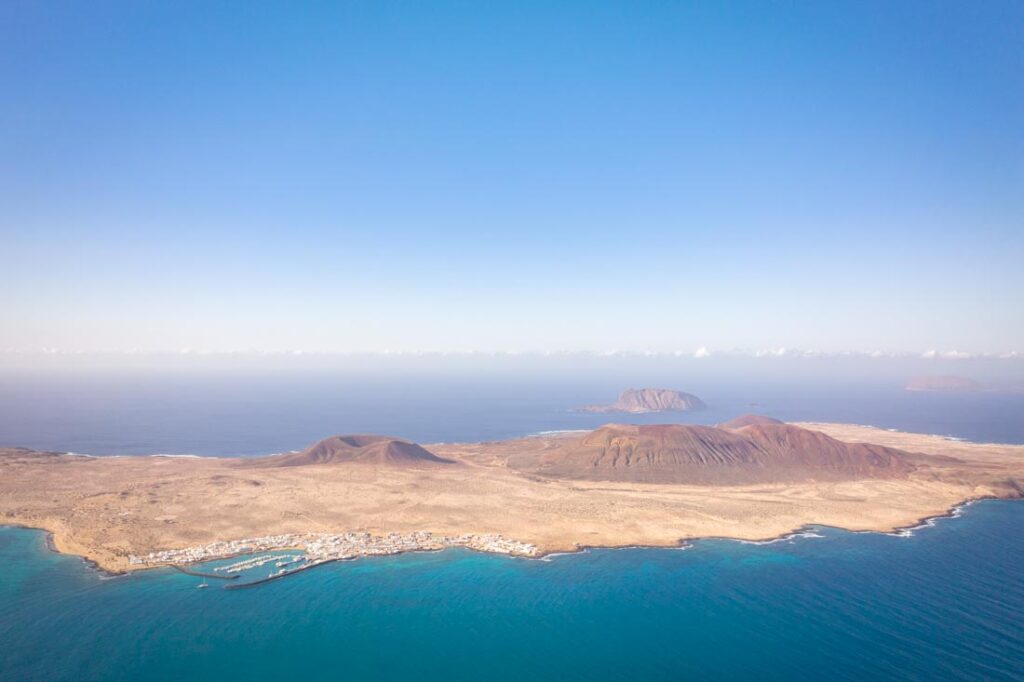
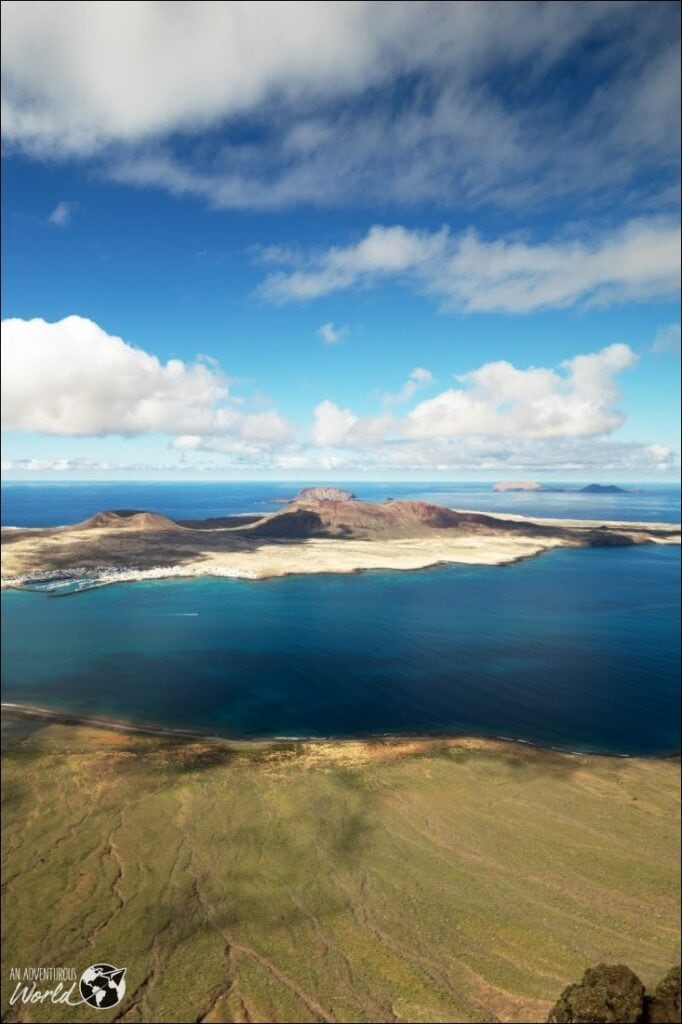
I’ve explored a fair few corners of the Canary Islands over the years, but my favourite has to be Lanzarote. I find it such a unique island, and it’s absolutely stunning too. When you’re standing at Mirador del Rio looking at the barren island of La Graciosa, you’ll see what I mean.
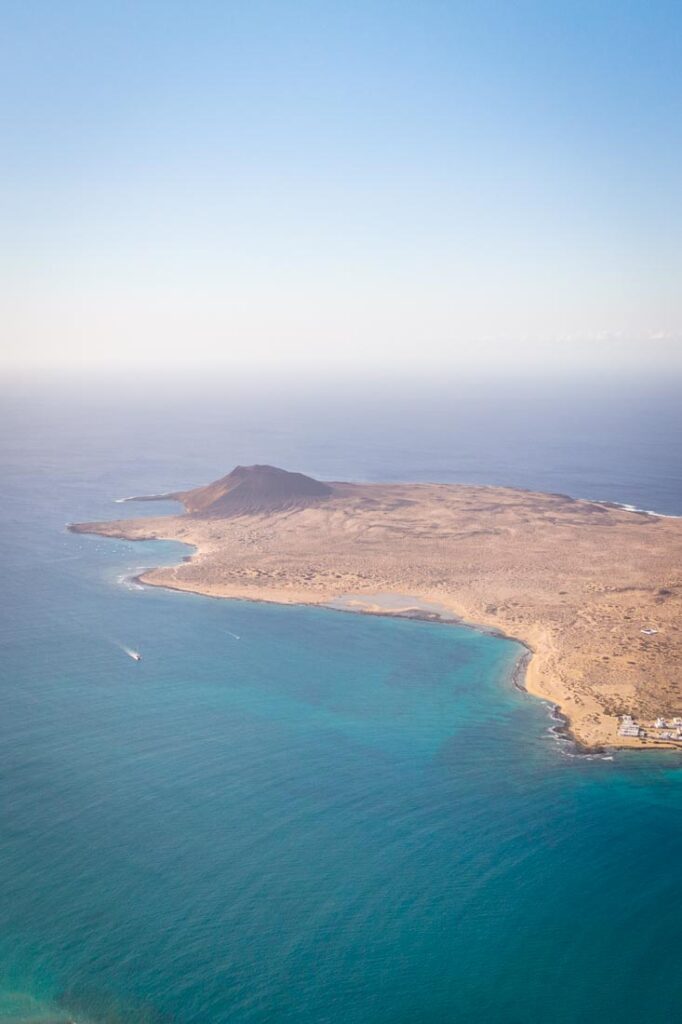
La Graciosa is such a fantastic place for a day trip, especially if you want a swimming adventure. This small island sits just off the northern tip of Lanzarote, with no tarmac roads, one main village and a coastline of pale sandy coves. It feels nothing like the busy resorts in the south, even though it’s only a short boat ride away.
Most of the swimming happens on the south coast, where sheltered bays face Lanzarote and the water is often calm and clear. The north faces the open Atlantic, so its wilder beaches are better for a walk than a swim.
In this guide, I’ll cover the ferry from Órzola and the best beaches for a swim, including the high-tide lagoon at Playa Francesa. You’ll also find tips on choosing a beach, staying safe and planning a day trip.
How to get to La Graciosa from Lanzarote
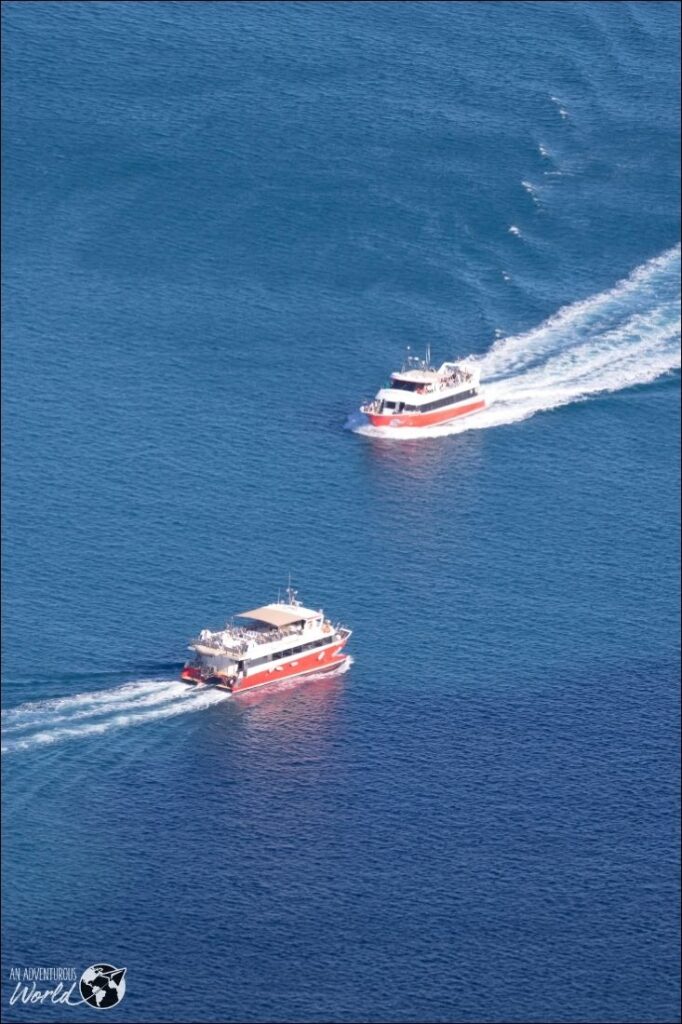
You reach La Graciosa by boat from Órzola, a small fishing port at the northern tip of Lanzarote.
Taking the ferry from Órzola
Boats cross the strait known as El Río to Caleta de Sebo, La Graciosa’s main village. It’s only around a kilometre wide at its narrowest, but the crossing takes about 25 minutes as the boat follows the channel.
Biosfera Express runs regular sailings throughout the day. On the current timetable, the first boat leaves Órzola at 8am and the last one back departs La Graciosa at 6.30pm. Times change through the year, so check the latest schedule and book ahead in peak season.
At the time of writing, a non-resident adult return costs €29 and a child return €15. Date and time changes are free (subject to availability), and sports equipment travels free too, so bring the snorkel gear.
Travelling as a group
If you’re heading over with a big group, sort the crossing early. Biosfera Express offers Group Travel arrangements for parties of 10 or more, with group discounts and a more personal booking service.
It’s worth a look for families, friends or sports clubs planning a swim together. Getting everyone on the same sailing makes the day far simpler.
The best places to go swimming on La Graciosa
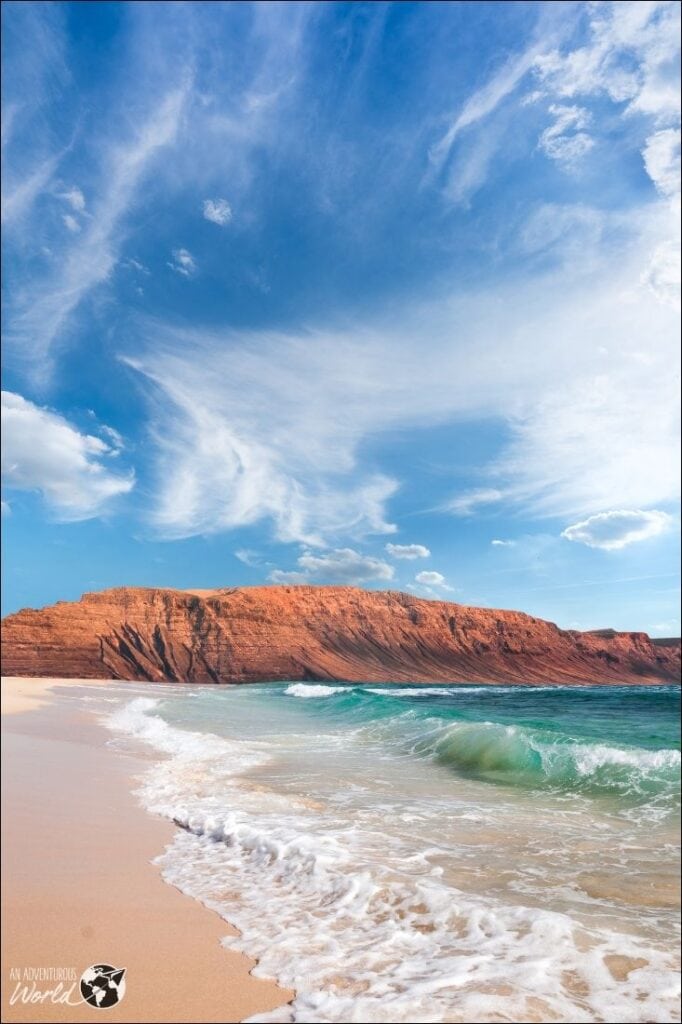
The calmest water on La Graciosa is along the south coast facing Lanzarote, while the north coast is far wilder.
Playa de La Laja and Playa del Salado
Playa de La Laja sits beside the harbour in Caleta de Sebo, so you can be swimming minutes after leaving the ferry. The sandy bottom and usually calm water make it a good choice with young children, and restaurants are close by. Playa del Salado is a short walk along the coast and marks the start of the track to Playa Francesa.
Playa Francesa
Playa Francesa is the beach most people head for, and for good reason. This 435-metre horseshoe of pale sand faces south, so the bay is sheltered and the water is usually calm and shallow.
A rocky outcrop splits the beach in two, and at high tide a still lagoon forms that’s great for snorkelling. You also get a superb view across El Río to the Famara cliffs.
It’s around 2km from Caleta de Sebo, which is a 30 to 40-minute walk along a sandy track. You can also cycle, as the bike route ends by the beach. There are no facilities, shade or lifeguards, so bring everything you need.
Playa de la Cocina
Walk 10 to 15 minutes beyond Francesa and you’ll reach Playa de la Cocina, below the yellow slopes of Montaña Amarilla. Bikes and taxis can’t get here, so it’s usually much quieter.
The water is clear and generally calm, with good snorkelling around the rocks. Water shoes help on the volcanic rock, and again there’s no shade or facilities.
Playa de las Conchas
Playa de las Conchas, on the north-west coast, is arguably the most beautiful beach on La Graciosa. Its 610 metres of golden sand look out to the islet of Montaña Clara. In 2026, it was even nominated for Best Beach in Spain by Condé Nast Traveler.
The catch is that it faces the open Atlantic, so big waves and strong currents are common. The red flag flies often and swimming is generally not recommended.
It’s around an hour’s walk from Caleta de Sebo, or you can cycle or book a 4×4 taxi. Playa Lambra, further along the north coast, is just as wild.
Which beach is best for swimming?
For most visitors, Playa Francesa is the best all-round choice for a swim. It’s sheltered, shallow and easy to reach, and the high-tide lagoon is a bonus for snorkellers.
With young children or limited time, La Laja is the simplest option, while La Cocina is best for clear water and fewer people. Leave Las Conchas and Lambra for the views.
Conditions change quickly, though. The south-facing beaches are sheltered from the usual north-easterly trade winds, but they can get choppy when the wind swings round to the south. Check the forecast, watch for flags, and if the water looks rough, stay on the sand.
Tips for visiting La Graciosa
Getting around and what to bring
There are no tarmac roads on La Graciosa, just sandy streets and dirt tracks. Visitors can’t bring cars over, so you’ll get around on foot, by bike or in one of the island’s 4×4 taxis.
Bike hire is easy to find near the harbour, but the sand makes cycling harder work than you’d expect. If you take a taxi, agree a pick-up time before you’re dropped off.
Beyond the village, there are no shops, cafés or shade. Bring plenty of water, snacks, high-factor sun cream and a hat.
Staying safe in the water
There’s no lifeguard service on any of La Graciosa’s beaches, so swim with someone else, stay within your depth and watch children closely. The currents in El Río are also stronger than they look.
Each autumn, hundreds of swimmers take on the Travesía a Nado El Río, a 2.6km race across the strait. First held in 1993, it’s often disrupted by the sea, and in 2014 it was stopped halfway because of strong currents. It’s an organised event with safety boats, so never attempt the crossing on your own.
Respecting the marine reserve
The waters around La Graciosa form part of a marine reserve created in the mid 90s, one of the largest in Spain. Fishing is tightly restricted, and around the Roque del Este islet it’s banned altogether. For visitors, that means leaving shells, rocks and sea life where they are. Take all your rubbish home, too.
Can you visit La Graciosa on a day trip?
Yes, a day trip is very doable if you catch an early boat. Head straight to Playa Francesa for a morning swim, ideally around high tide, then walk on to La Cocina. Back in Caleta de Sebo, grab a seafood lunch and finish with a dip at La Laja before the boat home. That said, the island is at its most peaceful once the day-trippers leave, so a night or two is worth it if you can.
On the drive back south, the natural pools at Punta Mujeres make a good final stop. Spain’s tourism board recommends swimming there around mid-tide, and the walled pools and steps make getting in easy. For more ideas on the main island, take a look at my guide to Lanzarote’s beaches.
If you’re thinking of heading to La Graciosa and have any questions, let me know in the comments below and I’ll get back to you!