
This post contains product affiliate links. These are mainly on items/hotels/tours that I personally endorse & love. I may earn a small commission if you make a purchase, but at no extra cost to you.
Are you looking at sampling the best food Brussels has to offer? From Belgian chocolates to Flemish stew, this is what to eat in Brussels!
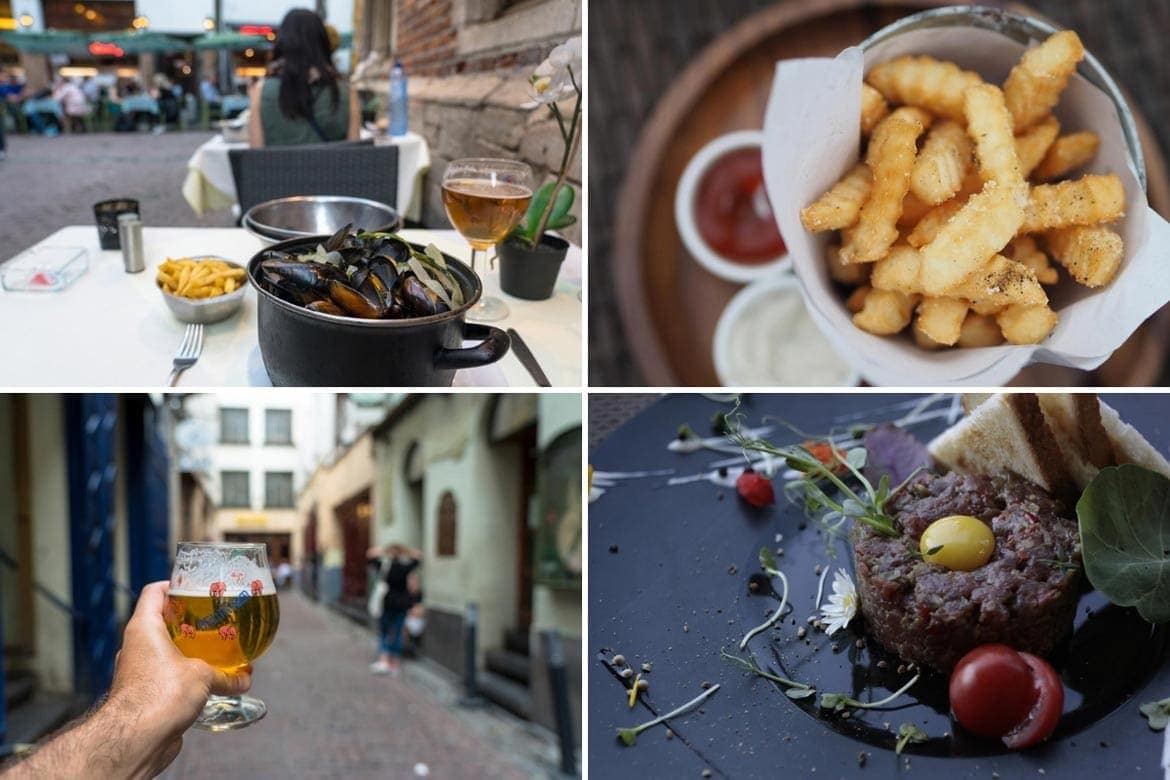
Brussels often gets overlooked as a capital city but I’ve always had an amazing time here. One question I always get asked though is what’s the food like?
Home of the EU parliament and wedged between Germany, France and the Netherlands, it’s hard to get a true taste of Belgium. That’s why I wanted to show you what to eat in Brussels for your next trip here. You won’t be disappointed once you sample a few of these dishes.
Being of French and Flemish origins, home to a large migrant population and host to business people from all over the world, the Brussels food scene is diverse and delicious. However, among this diversity, Brussels also maintains its unique Belgian cuisine.

The cuisine has similar roots to many western European meals. However, the thing about Belgian food is, once they find something they like, they perfect it. For example, you will not eat just your average fries, you will eat fries cooked to perfection.
When thinking about things to eat in Brussels, waffles, chocolate and beer might spring to mind. However, Belgium also has many traditional savoury dishes, such as hearty Flemish stew, local favourite Belgian meatballs and decadent Vol-au-vent.
In case you’re headed to Brussels and are looking to sample the local delicacies, I have created this Brussels food guide. Grab a fork and dig in!
Also, if you’re only in Brussels for a day, then check out my guide on what to see and do in just 24 hours! This is the perfect guide for people looking for a Brussels itinerary short on time. You can also check out some of the best day trips from Brussels here too.
Are you planning an amazing weekend in Brussels? If so, you may want to book your hotels and tours asap to ensure availability. Here are some links to quickly help plan your trip!
Best hotels and apartments in Brussels:
- Rocco Forte Hotel Amigo (top rated 5* hotel)
- Moxy Brussels City Center (top rated 4* hotel)
- Urban Yard Hotel (top rated 3* hotel)
Best activities and tours in Brussels:
- Walking Tour with Belgian Lunch, Chocolate, & Beer
- Chocolate Museum Entrance with Tasting (top activity)
- Brussels Atomium Entry Ticket (usually sells out)
If none of these take your fancy, I’ve rounded up the coolest hotels in Brussels for every budget.
Brussels menu decoder
Brussels is officially bilingual, so you’ll see dishes listed in French, Dutch or both. This is what to look out for on the menu.
| Dish | In French | In Dutch | Good to know |
|---|---|---|---|
| Fries | frites | frieten | Order mayo, not ketchup |
| Mussels and fries | moules-frites | mosselen met friet | Best from July to April |
| Grey shrimp croquettes | croquettes aux crevettes grises | garnaalkroketten | Served with lemon and fried parsley |
| Flemish stew | carbonnade flamande | stoofvlees | Beef slow-cooked in beer |
| Meatballs | boulets | balletjes | Usually in tomato sauce |
| Waterzooi | waterzooi | waterzooi | Creamy stew with chicken or fish |
| Vol-au-vent | bouchée à la reine | koninginnenhapje | Puff pastry with creamy chicken |
| Raw beef | filet américain | filet américain | On toast it’s a toast cannibale |
| Rabbit in cherry beer | lapin à la kriek | konijn in kriek | Made with kriek lambic |
| Waffles | gaufre de Bruxelles / de Liège | Brusselse / Luikse wafel | Two very different waffles |
Where to eat in Brussels (and where not to)

Before you start eating, a quick word of warning about Rue des Bouchers. It’s the narrow, restaurant-lined lane just off the Galeries Royales Saint-Hubert, and it’s lovely to walk down. It’s also the city’s best-known tourist trap, with waiters hustling you in from every doorway and prices to match. Have a wander, take your photos and then eat somewhere else.
For seafood, head to the streets around Place Sainte-Catherine, the city’s old fish market. For fries, it’s Place Jourdan near the European Quarter. And for chocolate, the Sablon is lined with some of the best chocolatiers in Brussels.
Savoury
Belgian fries
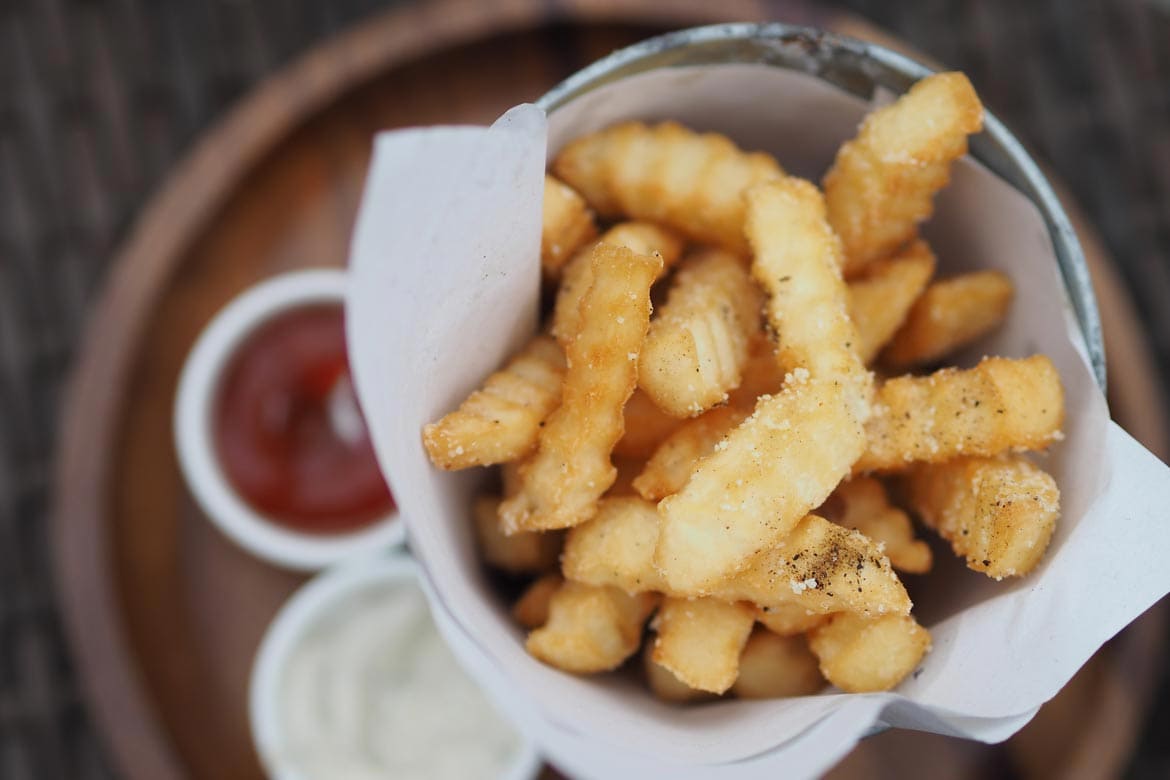
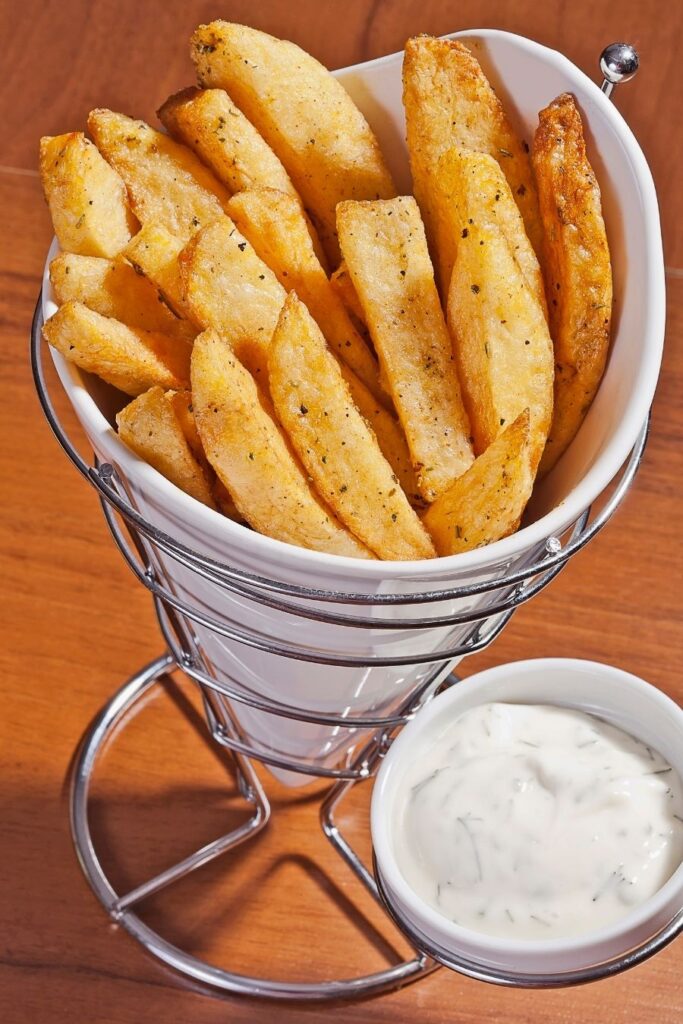
Let’s get one thing clear. Belgium considers itself the true origin of fries and you may make quick enemies by using the wrong title. If you think you can’t help but slip the ‘French’ in there while ordering, play it safe and go by their local name pommes frites.
Pommes frites are a staple of the Belgian diet and as such, the technique to create excellent fries has been perfected. A double frying method is used, to achieve fries that are soft on the inside with a crisp and crunchy outer layer. Most Belgian dishes often come with a side of fries, so you’re going to become well acquainted by the end of your trip. Do as the Belgians do and eat them with mayonnaise.
For the best fries in the city, venture beyond the Grand Place and find a proper friterie (frietkot in Dutch). Maison Antoine on Place Jourdan has been frying since 1948, and it’s the one most locals will send you to. The fries are double-fried in beef fat, and the bars around the square will happily let you eat your cone at their tables as long as you order a drink.
If you want the backstory, the Frietmuseum opened in 2025 on Rue de l’Étuve, right opposite the chocolate museum. If you love your chips/fries, then this is the place for you!
Moules frites
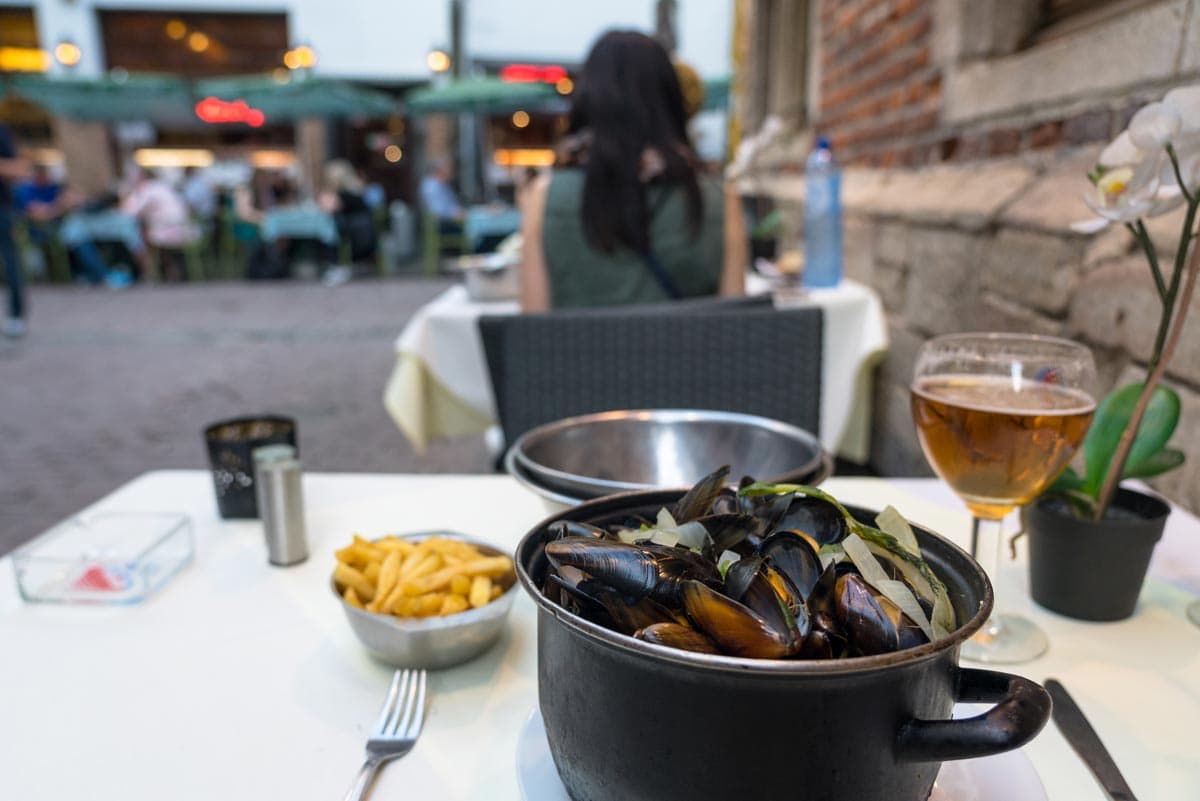
When it comes to what to eat in Belgium, you’ll find moules frites all over the country. It’s a big pot of mussels steamed in a broth, with a side of fries. Moules marinières is the classic, cooked with white wine, butter, leeks, celery and parsley.
Most of the mussels eaten in Belgium actually come from Zeeland, just over the border in the Netherlands. The season starts in July and runs right through to April, so this is as much a cosy autumn dinner as it is a late summer lunch.
Moules is a versatile dish. If you’re unsure about mussels you can order moules as a shared appetiser. If you’re a true fan, go all in and get moules frites as your main. I promise you you won’t regret it.
Vol-au-vent
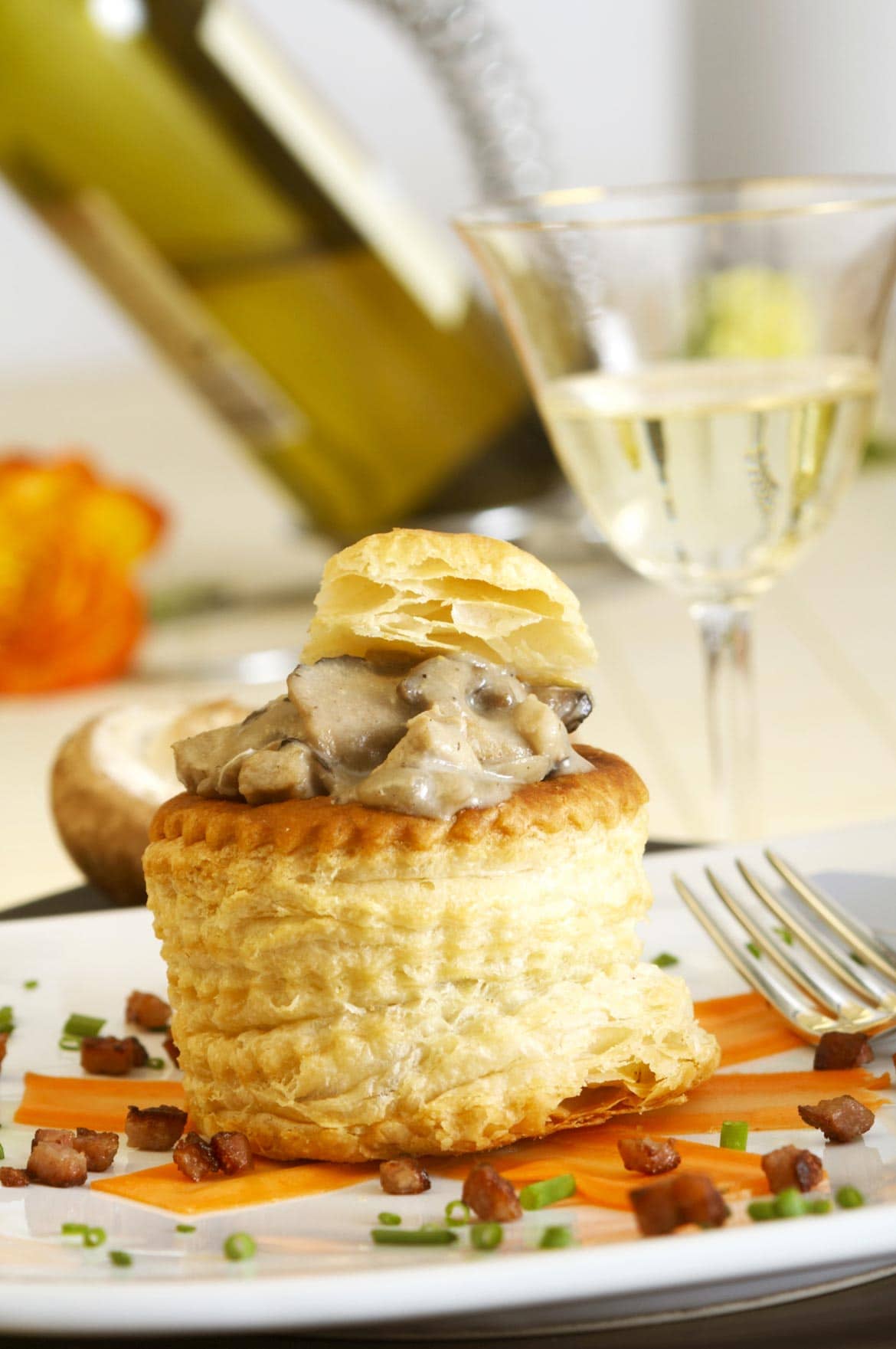
Fill a puff pastry bowl with a deliciously creamy chicken and mushroom sauce, top with parsley, serve with a side of mash or fries and you get Vol-au-vent. Vol-au-vent roughly translates to waft of air, which refers to the light puff pastry bowl in which it is served – which adds a satisfying crunchy element to the dish.
This delightfully creamy dish can also come sans chicken in some restaurants and is equally delicious. Be sure to have vol-au-vent on your personal list of things to eat in Brussels!
Grey shrimp croquettes
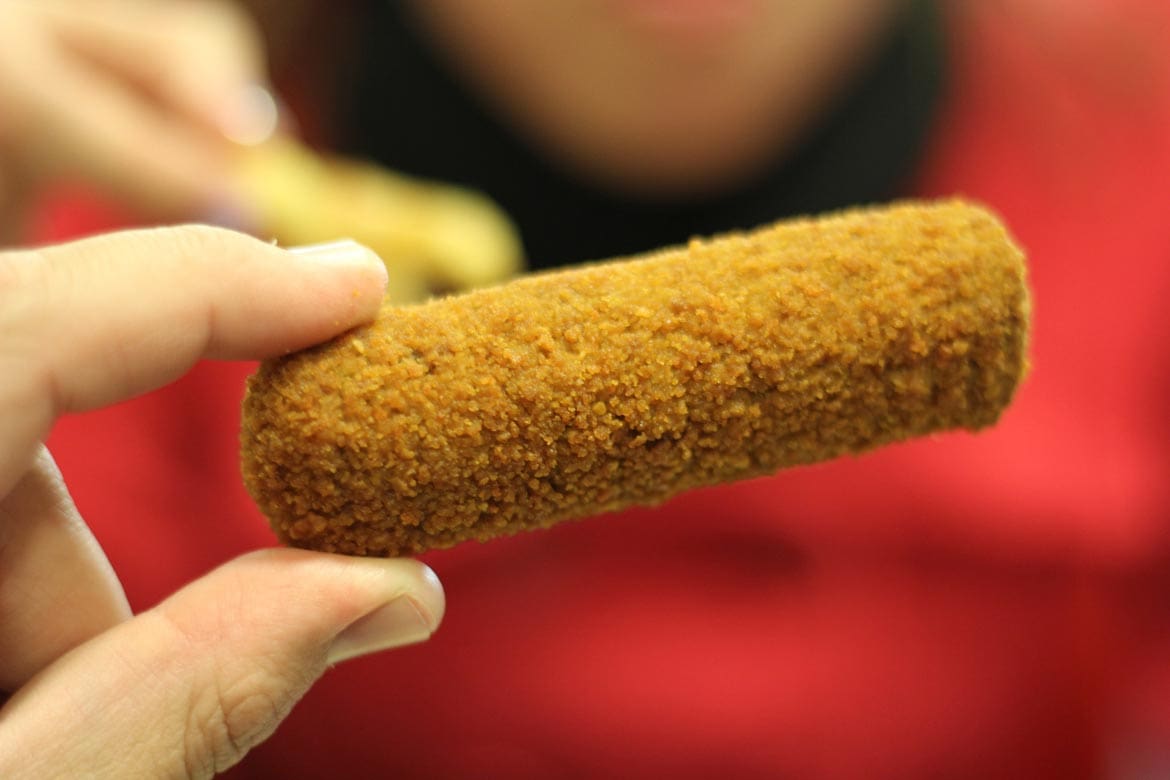
Grey shrimp croquettes are made with tiny North Sea grey shrimp folded into a thick, creamy béchamel. Once it has set, it’s rolled in breadcrumbs and deep fried, so you get a crisp shell with a molten centre. You’ll find them on the menu at most brasseries, usually as a starter.
They normally come with a wedge of lemon and a little pile of fried parsley. They’re not high on the healthy scale, but they are delicious and they’re definitely one of my favourite things to eat in the city.
Belgian meatballs
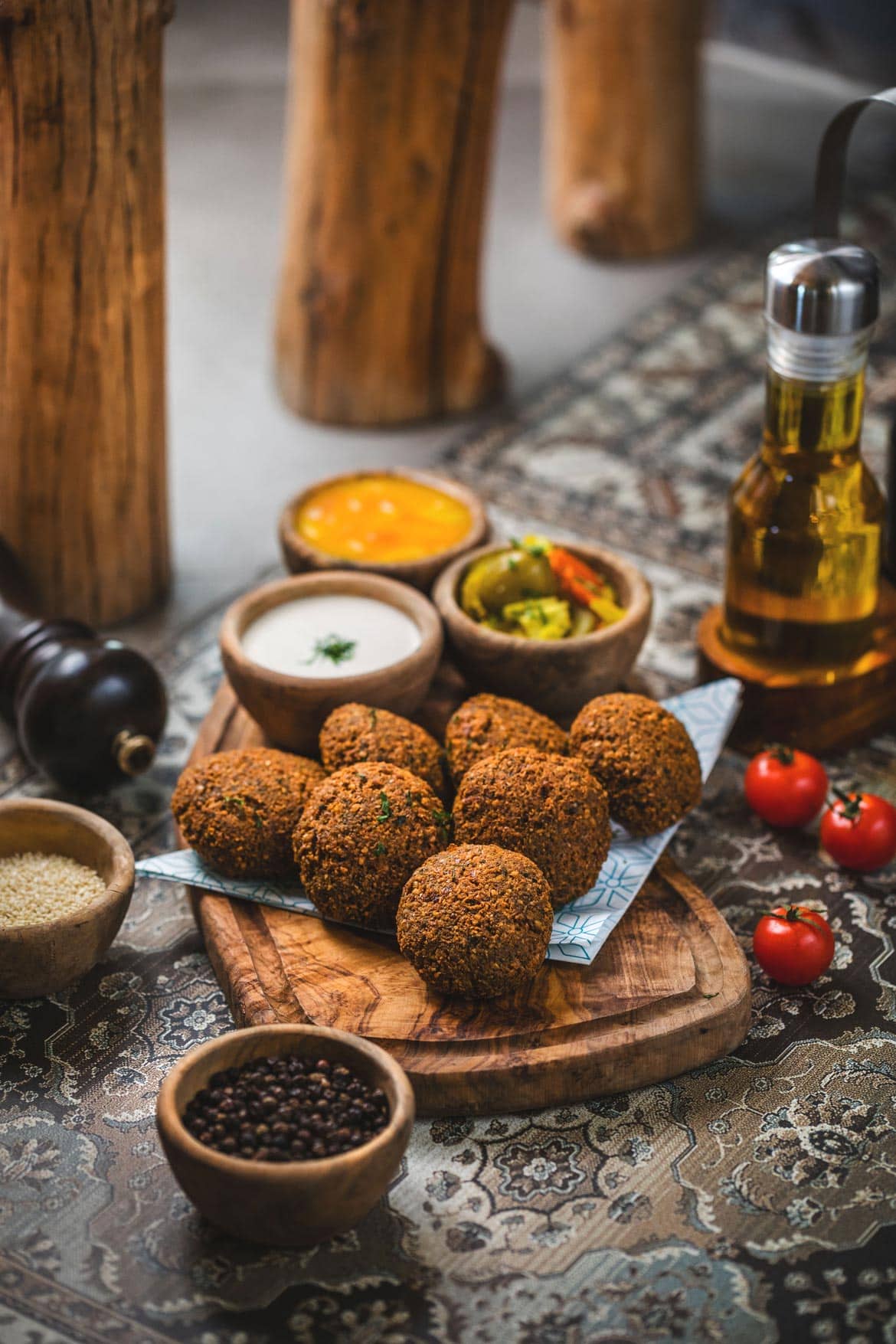
Belgian meatballs are a local favourite and definitely what to eat in Brussels on a cold winters day – though they can be enjoyed any time of year! The meatballs, known as boulets or balletjes are traditionally comprised of ground beef or pork, bread crumbs, eggs and herbs.
These meatballs are usually served in a classic tomato sauce, with a side of mashed potato or (you guessed it) fries. Some restaurants also serve veggie versions of this classic dish, so your vegetarian companions can try it too.
Filet américain (steak tartar)
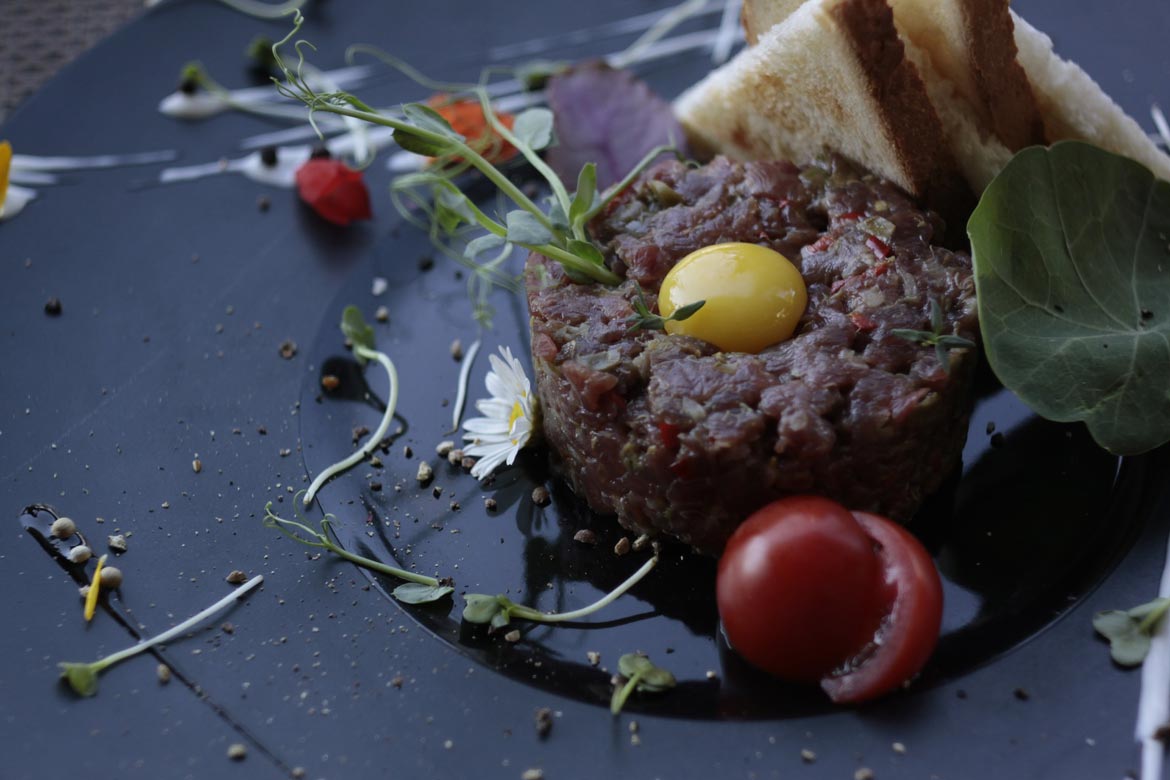
The only thing that sounds less appealing than eating raw beef with onions, capers, Tabasco, egg yolk and salt, is watching it get prepared in front of you first. While it may sound bizarre, Cannibale – or steak tartar, is actually quite the delicacy. So much so that the restaurants which take great pride in their Cannibale will prepare it at your table. That’s when you know it’s good.
On menus in Brussels, you’ll usually see it listed as filet américain. Spread on toast, it becomes a toast cannibale, which is where the nickname comes from. For the real deal, Au Vieux Saint Martin on the Grand Sablon is the place locals will point you to.
You’ll see many locals devouring this concoction served with slices of bread and topped with a zesty dressing. This is what to eat in Brussels if you’re feeling adventurous! I can’t fly the flag for tartar enough. Get over your fear and stuff it in your face; it tastes great.
Lapin à la kriek
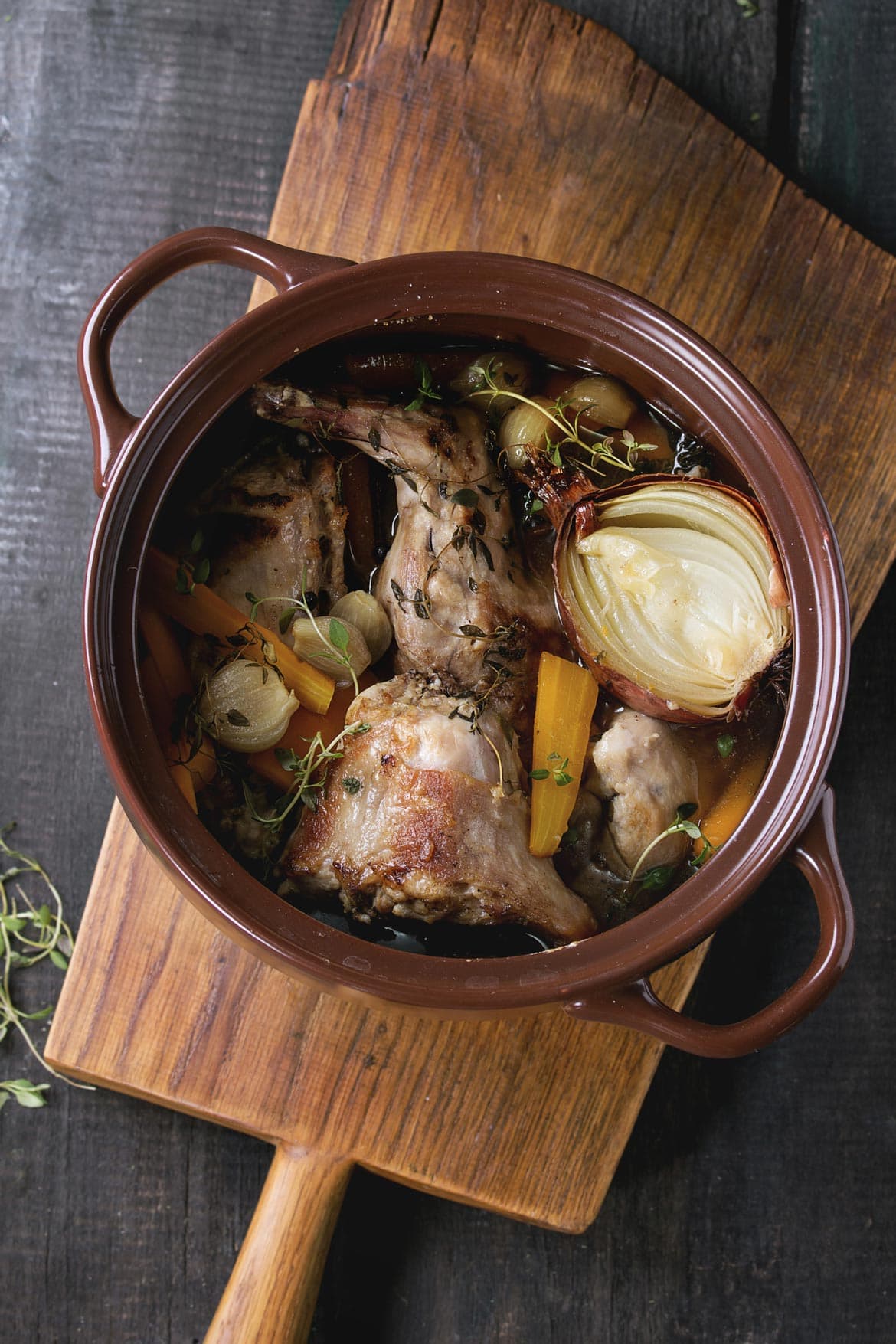
Lapin a la Kriek, or Rabbit in a Cherry Beer, is the perfect summer dish. It’s a surprisingly summery dish full of flavour. This traditional Belgian dish is rabbit slow-cooked in kriek, a sour cherry beer made by steeping cherries in lambic. Lambic is Brussels’ own beer, fermented with wild yeasts from the air in and around the city. The sweet and sour sauce works perfectly with the rabbit, and it usually comes with vegetables or fries. Skip the wine and order a glass of kriek with it instead.
This traditional Belgian dish features pieces rabbit meat, served with a sour cherry Trappist beer sauce and a side of vegetables. The combination of meat and sauce matches perfectly to create a light and tasty meal. Pair with a full bodied red wine and enjoy!
Flemish stew
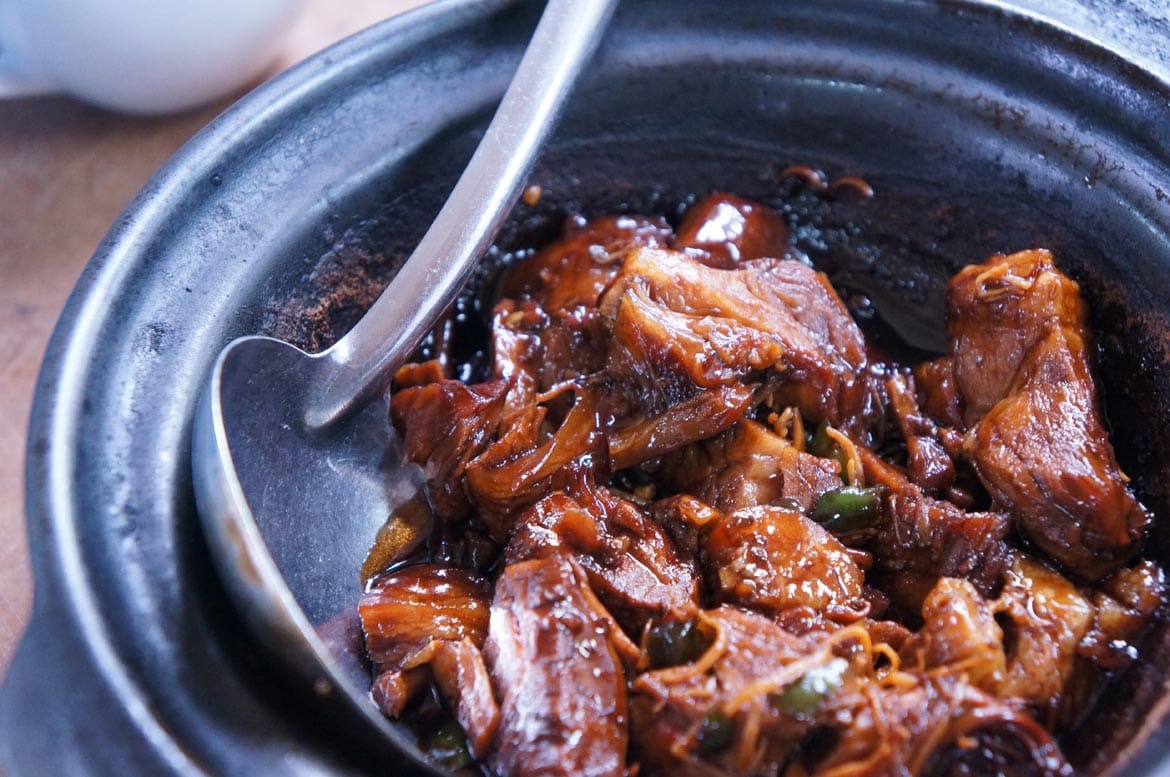
Nothing is better to warm your insides on a cold winters day than a bowl of hearty Flemish Stew. Imagine tender chunks of beef cooked in a thick Belgian beer broth, mixed in with bread, onion, mustard and seasoning. Just yummy.
A stew of many names, look on the menu for carbonnades flamandes, stoverij or stoofvlees. This rich and warming comfort food often comes in its own little casserole pot and is served with mash or fries. Be sure to give this Belgian dish a try. And I don’t really need to say it, but best washed down with beer!
Waterzooi
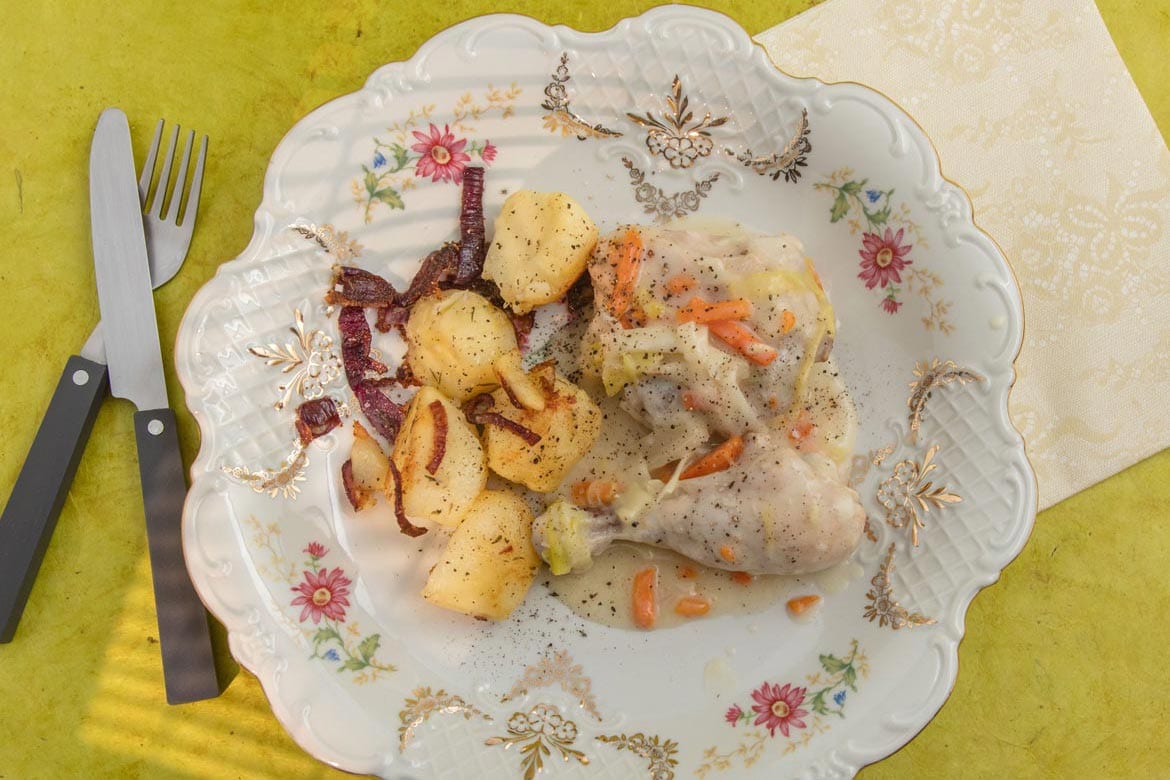
When it comes to food in Brussels, sometimes it may look bland, but it is tasty (I promise you!) While we’re on the subject of stew, this fish stew – or the modern chicken alternative – should also be on your list of things to eat in Brussels. As the name may suggest, Waterzooi comes from Belgium’s Flemish origins.
One English translation of the name is watery mess, which is what this stew can look like when served. However, don’t judge on appearance, this creamy stew is very tasty and will warm you up in an instant. Whether chicken or fish variety, Waterzooi is based on vegetable broth, egg yolks, cream and winter vegetables such as leeks and carrots.
Sweet
Belgian chocolate
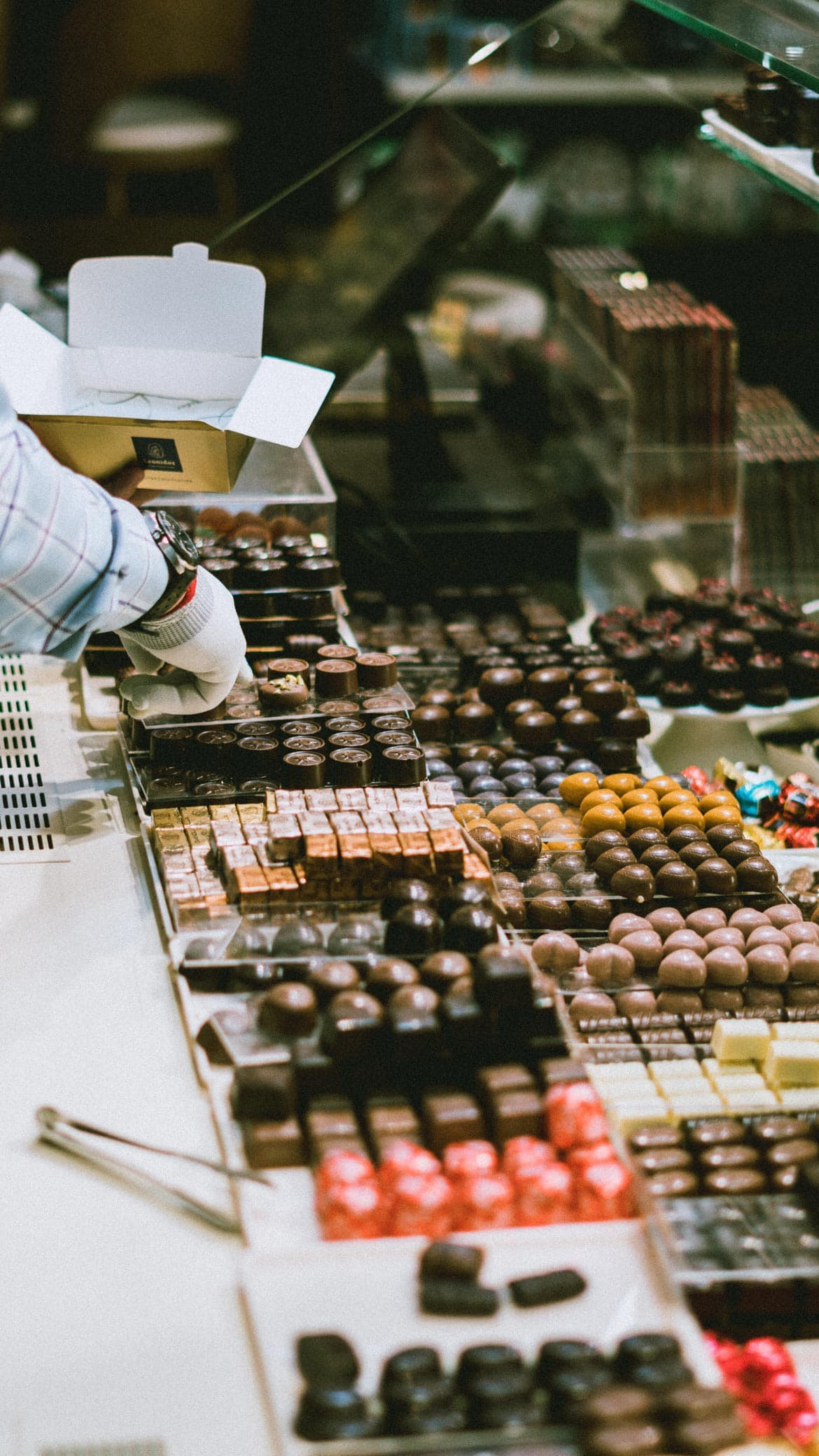
Get in my face. Belgium is a true follower of the idea that if you’re going to do something, you should do it right. Accordingly, chocolate is an art form. You will find melt-in-your-mouth hand-crafted chocolates available city wide. There are loads of chocolates shops dotted around the Grand Place too, so that’s the best place to start your Chocolate odyssey.
While in Brussels stop in at some of the many chocolatiers and treat yourself to a few pralines. If you have the time, sign yourself up for a chocolate making session, learn some tricks of the trade and delight your friends at home with your chocolate – if it makes it that far.
A great way of learning about Belgian chocolate is at Choco-Story Brussels, a few steps from the Manneken Pis on Rue de l’Étuve. It takes you through the history of chocolate from the cocoa bean to the praline, which was invented right here in Brussels in 1912. There’s a live praline-making demo and a tasting at the end, and an adult ticket is €16.
It’s open every day from 10am to 6pm, apart from a two-week closure in early January. If you’re visiting with little ones, pushchairs have to be left at the entrance, so a baby carrier makes life much easier.
Belgian waffles
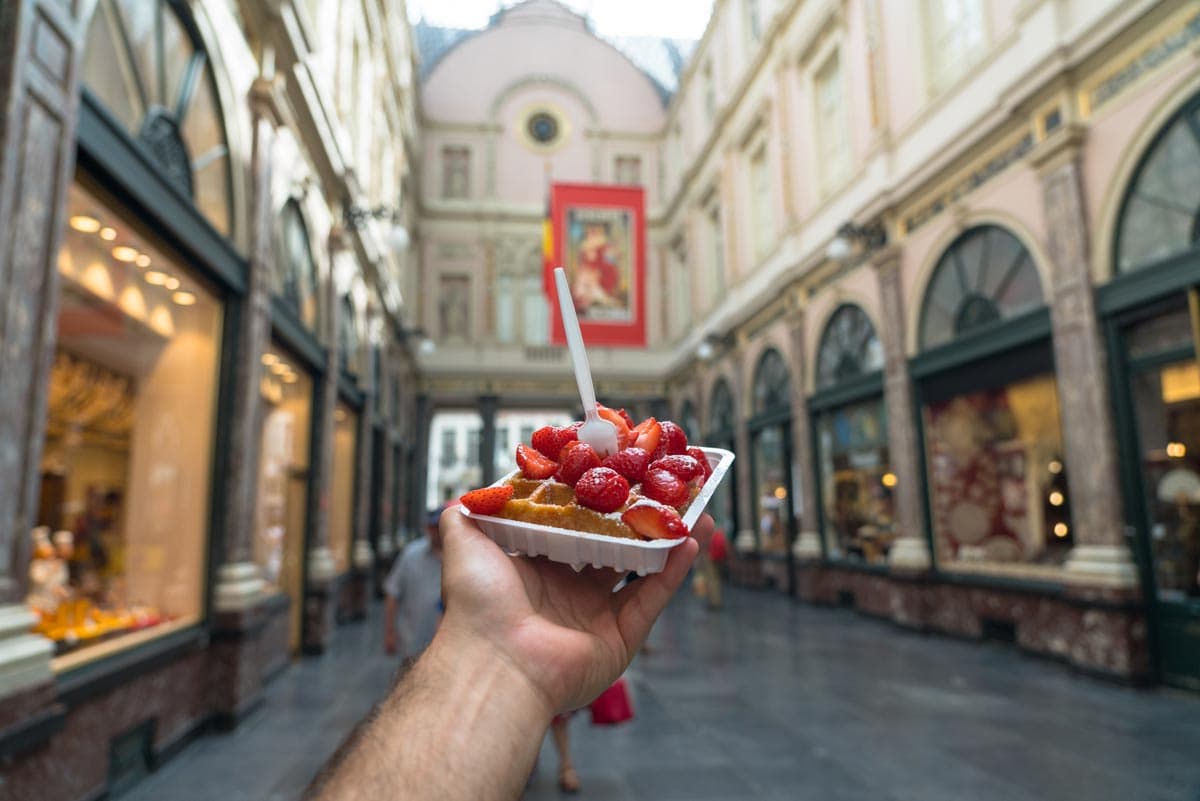
If you’ve got a sweet tooth, Brussels has got you covered. On every street you will find waffle stands and cafes, enticing you in with the sweet smell of waffles floating through the air.
The first thing to know is that there are two types of Belgian waffle. The Brussels waffle is the big, light, rectangular one, made from a batter and usually eaten sitting down. The Liège waffle is smaller and denser, made from a dough packed with pearl sugar that caramelises on the iron.
Locals tend to keep it simple. A Brussels waffle gets a dusting of icing sugar, while a Liège waffle is eaten plain and warm as you walk. That said, nobody is going to judge you for going all out.shri
Though some places serve savoury varieties such as ham and cheese, the typical toppings are usually sweet. Rumour has it, that the waffle grids in Belgium have been especially designed to have larger crevices – purely for the purpose of holding more delicious toppings. Choose from a combination melted chocolate, whipped cream, coulis and fruit and let your inner child jump for joy. For me, this is one of my favourite foods to eat in Brussels.
Pro tip: prices are usually on a per topping basis, be sure to check before asking them to use the lot. Alternatively, you can go on a waffle making workshop and learn how to make your own waffles for when you get home!
Drinks
Belgian beer
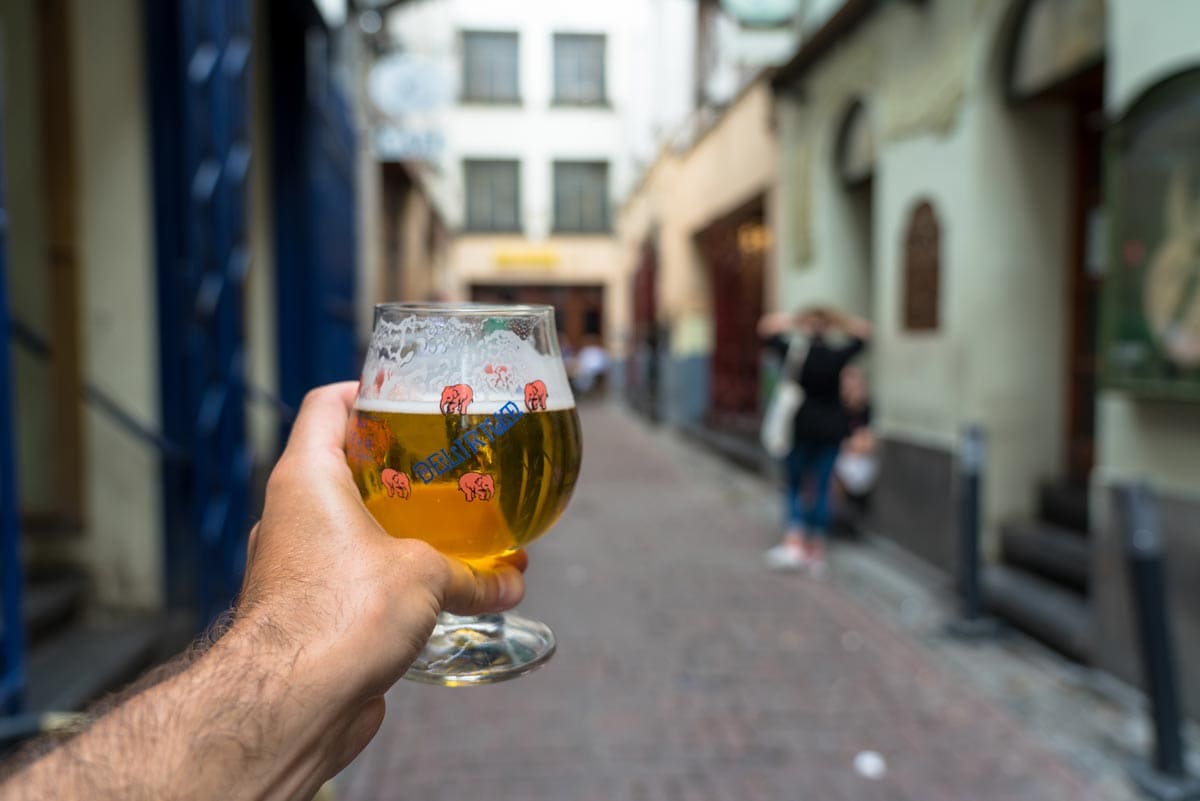
Ok ok, maybe this one isn’t edible, but it definitely deserves a spot in a Brussels food guide. Belgium has five official Trappist breweries: Chimay, Orval, Rochefort, Westmalle and Westvleteren. They set a very high bar for quality and flavour. Around them are close to 400 more breweries, from global giants to tiny craft outfits. Believe me, your quality beer options here are endless.
Many breweries make limited edition seasonal beers, which are well worth a try. If you want to branch out, but don’t know which beers would be your style, opt for a beer flight – several small glasses of different beers, so you can try them all!
A special place that I always recommend is Delirium Cafe, tucked down a little alley called Impasse de la Fidélité, a couple of minutes’ walk from the Grand Place. I first discovered this bar in 2007 and I’ve been coming back ever since. It’s a bar that has over 2,000 different beers. Yes, you read that right! They’ve got this huge 400+ page bible that you can choose your beers from, including a few over 13%. Good luck making your way through that book!
If you only try one style of beer in Brussels, make it gueuze. It’s a blend of young and old lambic, the wild-fermented beer that’s unique to Brussels and the countryside around it, and it’s tart, dry and nothing like a lager. Cantillon in Anderlecht is the city’s last traditional lambic brewery, and it doubles as the Brussels Museum of Gueuze. It’s about five minutes’ walk from Brussels-Midi station and opens Monday, Tuesday and Thursday to Saturday, from 10am to 4pm.
An amazing way of trying some of the best beers in Brussels is by going on a tour of the city. Then you’ll get to learn all about the history and variety of Belgian beers and how they’re brewed.
For a crash course, Belgian Beer World opened inside the old Stock Exchange building in 2023. It’s an interactive museum that finishes with a beer on the rooftop, and an adult ticket is €22.
Jenever (drink)
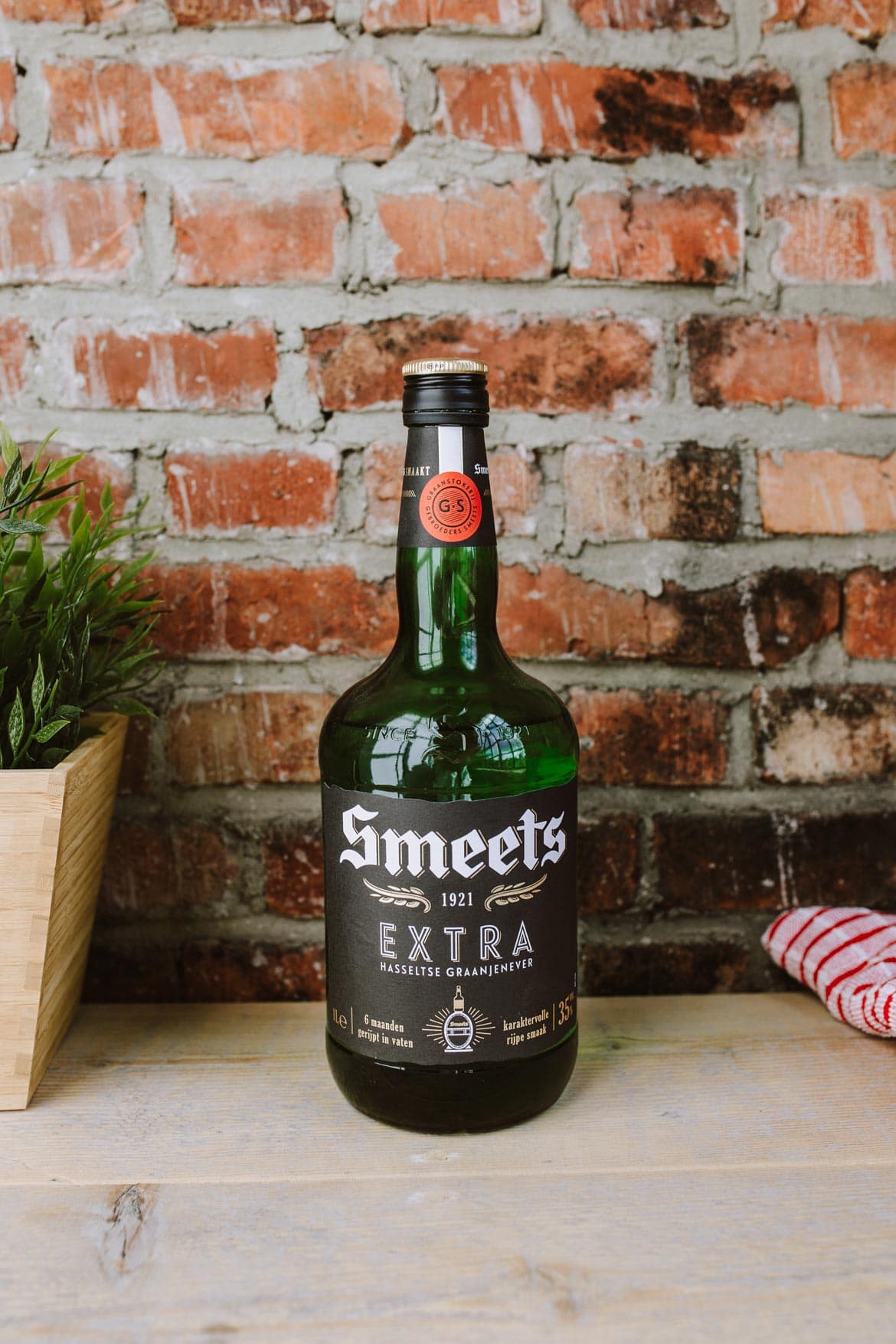
Once again, not a food, but no Brussels food guide would be complete without mentioning this local libation. Jenever is sometimes referred to as “Dutch gin” however it is also drunk Belgium wide, especially during the festive season. It’s a protected spirit too, so it can only be made in Belgium, the Netherlands and a few small corners of France and Germany.
Although Jenever comes in a vessel that looks like a tall shot glass, believe me this is not for shooting. Doing so could put hairs on your chest. Jenever comes in jonge (young) and oude (old) styles, but the names refer to the recipe rather than how long it’s been aged. Jonge is lighter and cleaner, while oude has more malt wine in it and a rounder, almost whisky-like flavour. Korenwijn, which means grain wine, has even more malt wine again.
If the straight stuff is too intense, order a fruit jenever. It’s a much sweeter style and far easier to drink.
Which one of these foods to try in Brussels would you go for? Let me know in the comments below!
Are you a fellow foodie who likes to get to know a place by their taste buds? Then check out my food guides of Amsterdam, Athens, Barcelona, Madrid, Prague and Rome!
Like this blog post? Then make sure you Pin it for the future!

The Flemish Stew looks de-li-cious !!!! And Belgian Waffles are my fav too 🙂
YES! Can’t get enough of those waffles when I’m in Brussels. So much delicious food to eat in the city!